

About
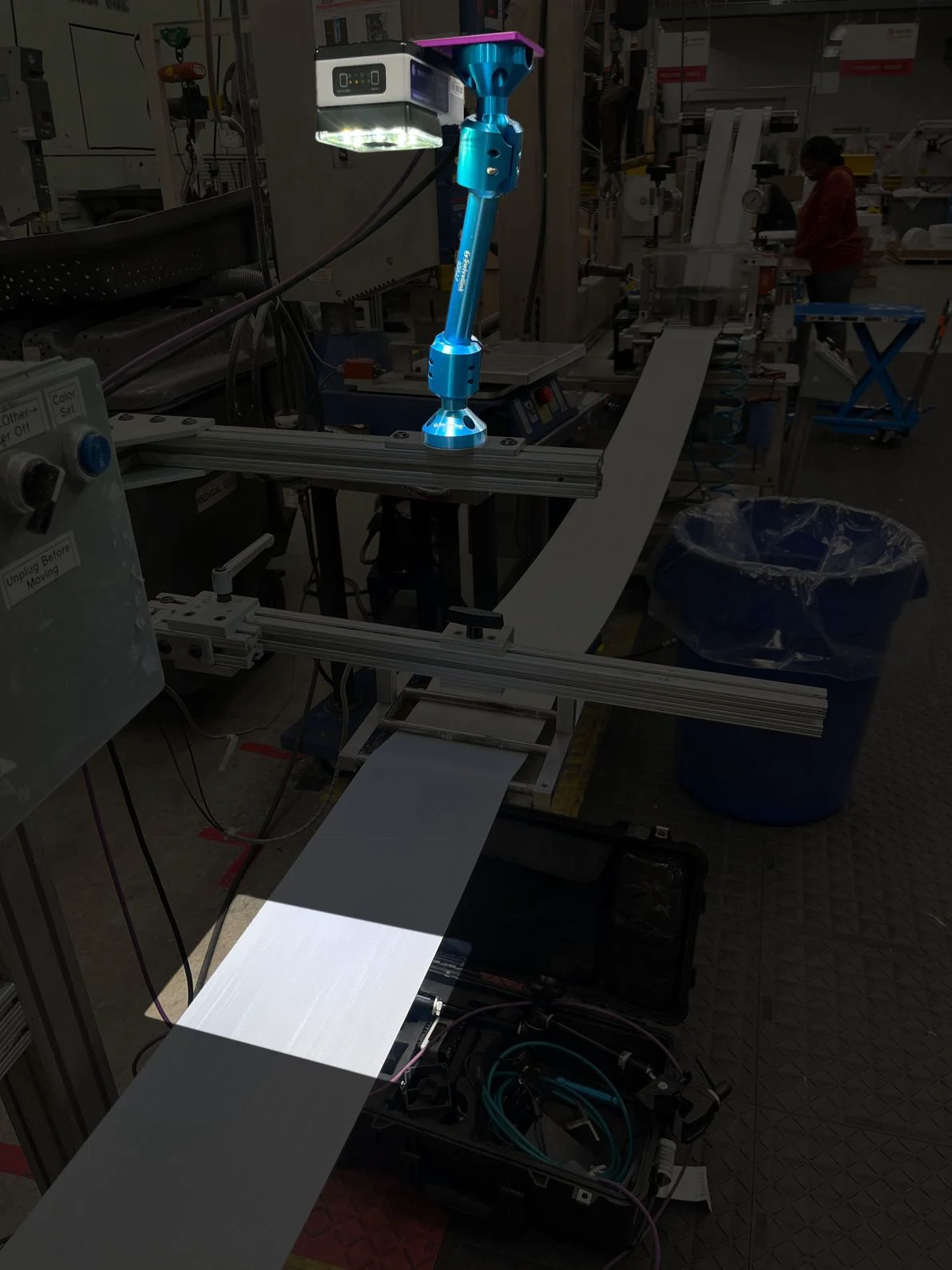
Overview.ai is an industrial AI vision platform that delivers automated quality inspection for manufacturing environments across automotive, semiconductor, pharmaceutical, aerospace, packaging, food, and textile industries. The system uses vision transformer-based deep learning models to identify defects that rule-based or traditional machine vision systems routinely miss — including micron-level scratches, cracks, porosity, and misalignment on reflective or complex geometries. At the core of the platform are all-in-one smart cameras (OV10i, OV20i, OV80i) with NVIDIA GPUs embedded in each unit, enabling full on-device AI training and inference with zero cloud dependency. Production data never leaves the factory floor, addressing both latency and data security concerns. Configuration is entirely browser-based with no software to install, and each camera operates as a local networked device. Overview.ai integrates with every major industrial protocol — EtherNet/IP, Profinet, Modbus, OPC-UA, MQTT, HTTP/S, FTP/SFTP, RS232, and Discrete I/O — making it compatible with virtually any PLC or automation stack. Customers report a 75% reduction in inspection costs, 50% reduction in rework, and 20% reduction in scrap. The platform stores 200K+ production images on-device for rapid root cause analysis and model retraining. Additional software tools include OV Auto-Defect Creator Studio, OV Auto-Integration Builder, and OV Fleet & Vault for enterprise-scale deployments.
Key Features
- 100% Edge AI Inference: NVIDIA GPU embedded in every smart camera enables full on-device training and inference — no cloud connectivity required, keeping production data on the factory floor.
- Vision Transformer Models: State-of-the-art transformer-based deep learning models deliver industry-leading accuracy with up to 10x fewer training images compared to conventional approaches.
- Universal Protocol Support: Natively integrates with EtherNet/IP, Profinet, Modbus, OPC-UA, MQTT, HTTP/S, FTP/SFTP, RS232, and Discrete I/O, ensuring compatibility with any PLC or automation environment.
- Multi-Point & Assembly Inspection: Simultaneously verifies multiple regions of interest, validates complex assemblies, and detects defect types including scratches, cracks, porosity, and misalignment at production rates.
- GenAI-Powered Tooling: OV Auto-Defect Creator Studio and OV Auto-Integration Builder use generative AI to accelerate model creation and system integration, reducing deployment time from weeks to days.
Use Cases
- Automated defect detection on automotive components such as connectors, welds, and surface finishes at high production line speeds.
- Pharmaceutical visual inspection to verify packaging integrity, labeling accuracy, and tablet/capsule quality with zero cloud data exposure.
- Semiconductor manufacturing inspection for sub-micron defects on wafers, PCBs, and electronic components.
- Assembly verification in complex multi-component products to confirm every part is correctly seated, secured, and oriented.
- New Product Introduction (NPI) quality validation, enabling rapid model training with minimal sample images to support fast production ramp-up.
Pros
- Rapid Deployment: Factories can go from setup to live inspection in days, with model training completing in hours — far faster than traditional machine vision projects.
- No Cloud Dependency: Fully edge-based architecture ensures production data never leaves the facility, eliminating cloud latency, costs, and data privacy concerns.
- Broad Industrial Compatibility: Support for all major industrial protocols and open platform design means seamless integration into existing factory automation stacks without vendor lock-in.
- Proven ROI: Customers report measurable results including 75% lower inspection costs, 50% less rework, and 20% scrap reduction at scale across global deployments.
Cons
- Enterprise Hardware Investment: The system requires purchasing dedicated smart camera hardware, which may represent a significant upfront cost for smaller manufacturers or pilot projects.
- Specialized Use Case: The platform is purpose-built for industrial manufacturing inspection and is not suited for general-purpose computer vision or non-manufacturing applications.
- On-Premise IT Requirements: Fully edge-based deployment requires on-site IT infrastructure and local network configuration, which may demand additional resources for facilities without dedicated IT staff.
Frequently Asked Questions
Does Overview.ai require an internet connection or cloud access to operate?
No. Overview.ai operates entirely on the edge — each smart camera contains an embedded NVIDIA GPU that handles all AI training and inference locally. Production data never leaves the factory floor.
How quickly can a new inspection model be trained and deployed?
Models can typically be trained in hours using as few as a fraction of the images required by traditional systems (up to 10x fewer), and full deployment can be achieved within days of receiving the hardware.
Which manufacturing industries does Overview.ai support?
Overview.ai supports a wide range of industries including automotive, semiconductor, pharmaceutical, packaging, aerospace, renewable energy, food, and textile manufacturing.
What PLCs and automation protocols are compatible with Overview.ai?
Overview.ai supports EtherNet/IP, Profinet, Modbus, OPC-UA, MQTT, HTTP/S, FTP/SFTP, RS232, and Discrete I/O, making it compatible with virtually any PLC or factory automation system.
What types of defects can Overview.ai detect?
The platform can detect micron-level defects including scratches, cracks, porosity, misalignment, and cosmetic or structural flaws on reflective surfaces, complex geometries, and variable part placements.