
About
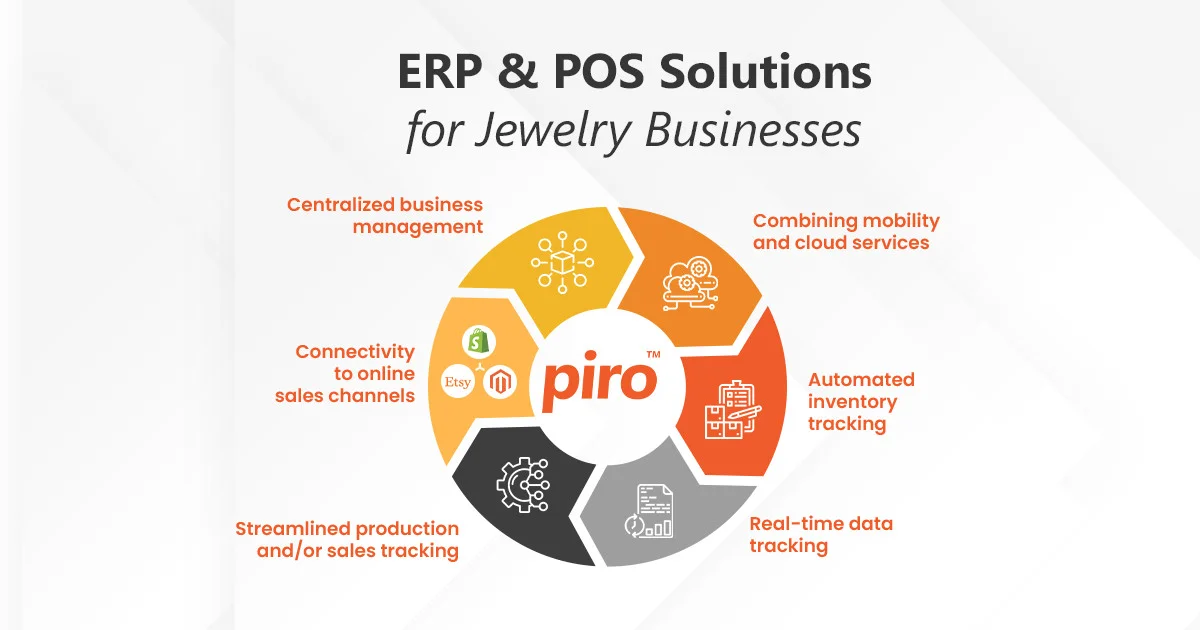
PIRO is a comprehensive ERP and POS solution purpose-built for the jewelry industry. Since 2007, it has helped jewelers ranging from single-location boutiques to multi-store enterprises streamline every aspect of their operations — from point-of-sale transactions to complex manufacturing workflows. The platform centralizes order management, custom order tracking, repair workflows, raw material and finished goods inventory, and customer relationship management in one place. Real-time production floor visibility gives business owners and customers live updates on order status, while automated inventory management eliminates manual stock counting errors. PIRO integrates seamlessly with popular third-party tools including Shopify for e-commerce and QuickBooks for accounting, enabling a connected online and in-store retail experience. Its customizable workflows adapt to each business's unique processes rather than forcing teams into a rigid system. Key capabilities include automated task management to save hours each week, milestone and deadline tracking for custom orders, multi-location support, and professional customer service tools. The platform is fully cloud-based, ensuring accessibility from anywhere while reducing IT overhead. PIRO is ideal for jewelry retailers, wholesalers, and manufacturers who need a scalable, industry-specific system to replace fragmented spreadsheets and disconnected tools. With dedicated onboarding, tailored recommendations, and ongoing support, PIRO positions itself as a long-term operational partner for jewelry businesses looking to grow profitably.
Key Features
- Integrated Jewelry ERP & POS: Unifies point-of-sale, manufacturing, inventory, CRM, and e-commerce into a single cloud-based platform tailored for jewelry businesses.
- Automated Inventory Management: Tracks raw materials, stones, metals, finished goods, and repairs automatically with real-time accuracy and zero manual errors.
- Custom Order & Deadline Tracking: Monitors every custom order milestone and due date, ensuring on-time delivery and full visibility for both staff and customers.
- Shopify & QuickBooks Integrations: Seamlessly syncs online and offline sales channels with Shopify, and keeps financials up to date via QuickBooks integration.
- Multi-Location & B2B/B2C Support: Scales from a single shop to multiple locations, supporting both wholesale and retail operations in one flexible system.
Use Cases
- A jewelry retailer managing in-store POS and online Shopify sales from a single unified platform.
- A custom jewelry manufacturer tracking production workflows, order milestones, and delivery deadlines in real time.
- A wholesale jewelry distributor managing B2B orders, inventory levels, and client relationships across multiple locations.
- A jewelry repair shop automating job tracking, parts inventory, and customer communication to reduce manual errors.
- A growing jewelry brand scaling from one store to multiple locations while maintaining centralized inventory and financial data.
Pros
- Industry-Specific Design: Built exclusively for the jewelry industry, offering workflows and terminology that map directly to how jewelers actually operate.
- All-in-One Platform: Eliminates the need for multiple disconnected tools by combining ERP, POS, inventory, CRM, and e-commerce in one system.
- Strong Integration Ecosystem: Native integrations with Shopify and QuickBooks reduce manual data entry and keep all business systems in sync.
- Proven Track Record: Trusted by jewelers worldwide since 2007, with a long history of supporting business growth and operational efficiency.
Cons
- Niche Focus: Designed exclusively for jewelry businesses, making it unsuitable for retailers or manufacturers in other industries.
- Pricing Not Publicly Listed: Pricing requires a consultation call, which may slow down the evaluation process for businesses comparing multiple solutions.
- Learning Curve for Complex Features: The breadth of ERP features may require significant onboarding time, especially for smaller shops transitioning from manual processes.
Frequently Asked Questions
What types of jewelry businesses is PIRO designed for?
PIRO is built for jewelry retailers, wholesalers, and manufacturers — from single-location boutiques to multi-store enterprises handling both B2C and B2B operations.
Does PIRO integrate with e-commerce platforms?
Yes, PIRO integrates with Shopify to synchronize online and in-store sales, and with QuickBooks for accounting and financial management.
Is PIRO cloud-based?
Yes, PIRO is fully cloud-based, allowing you to access your jewelry business data and manage operations from anywhere with an internet connection.
How does PIRO handle custom jewelry orders?
PIRO tracks every custom order, its milestones, and due dates in real time, providing both staff and customers with live production status updates.
How long does it take to get started with PIRO?
PIRO offers a free needs assessment consultation and tailored onboarding recommendations. Implementation timelines vary by business size and complexity, but the team provides ongoing support throughout.