

About
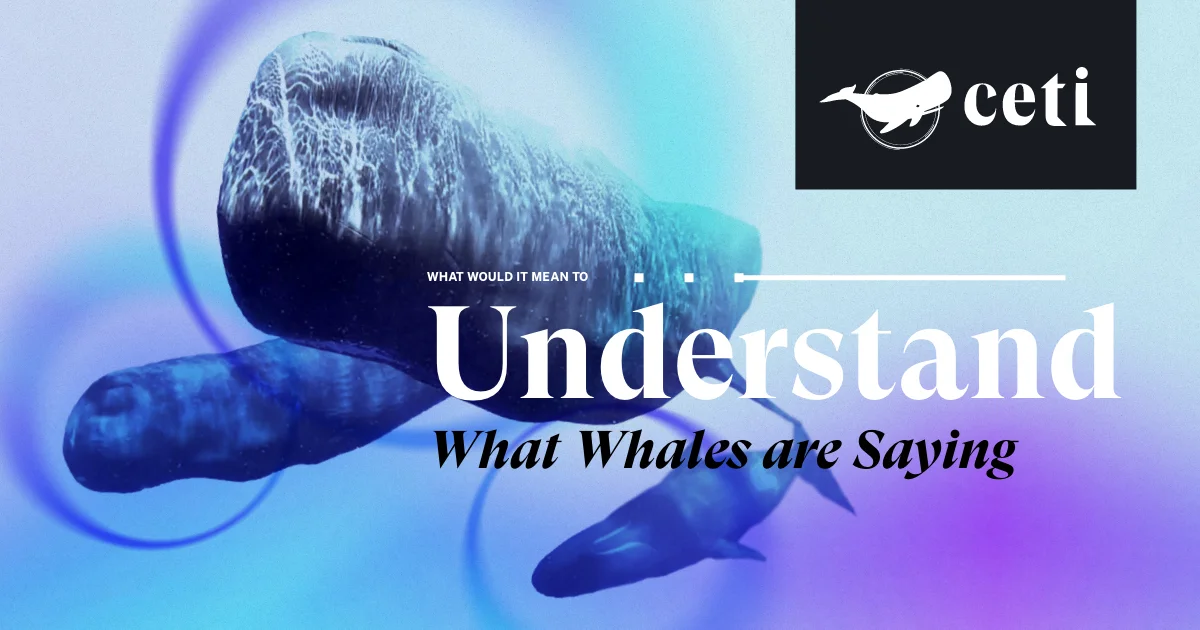
Project CETI (Cetacean Translation Initiative) is a pioneering nonprofit organization that sits at the intersection of marine biology, artificial intelligence, and conservation. Using a multi-phase research pipeline, CETI deploys aerial drones, hundreds of synchronized underwater microphones, and swimming robots to capture the movements and acoustic communications — called codas — of sperm whales in the wild. The raw data collected is then cleaned, annotated, and used to train a large-scale Whale Language Model that links behavioral context to sound patterns, drawing inspiration from modern NLP techniques used for human language. Sperm whales possess the largest known brains in the animal kingdom, and their click-based coda communication shows signs of cultural variation across groups, making them a compelling subject for language research. In the final validation phase, linguists and scientists conduct carefully designed playback studies to verify hypotheses about whale phonology, morphology, and language acquisition. CETI's findings are shared openly with the scientific community and the public, with the broader ambition of transforming human understanding of animal intelligence and strengthening ocean conservation efforts. The project is scientist-led, radically interdisciplinary, and represents one of the most ambitious interspecies communication efforts ever attempted.
Key Features
- Large-Scale Acoustic Data Collection: Deploys hundreds of synchronized underwater microphones, aerial drones, and swimming robots to record sperm whale sounds and behavior in their natural habitat.
- Whale Language Model: Trains a dedicated machine learning model that links sperm whale coda click patterns to behavioral context, analogous to large language models used in NLP.
- Behavioral & Linguistic Annotation: Raw acoustic and movement data is processed, visualized, and annotated by researchers to prepare it for AI training and linguistic analysis.
- Interdisciplinary Validation Studies: Scientist-led playback studies validate hypotheses about whale phonology, morphology, and language acquisition with input from over 10 partner institutions.
- Conservation-Driven Research: Findings are shared publicly to advance cross-species understanding and directly inform ocean conservation strategies.
Use Cases
- Marine biology researchers studying cetacean behavior and acoustic communication patterns.
- AI and NLP researchers exploring non-human language modeling and cross-species communication datasets.
- Conservation organizations seeking data-driven insights to advocate for sperm whale and ocean protection.
- Educators and students in biology, linguistics, or AI looking for real-world interdisciplinary research examples.
- Science communicators and journalists covering breakthroughs in animal cognition and artificial intelligence.
Pros
- Groundbreaking Scientific Mission: One of the first serious, technology-driven attempts to decode animal communication using modern AI — a genuinely novel and high-impact research direction.
- Truly Interdisciplinary Team: Brings together marine biologists, linguists, machine learning researchers, and robotics engineers from over 10 institutions worldwide.
- Open Knowledge Sharing: As a nonprofit, CETI commits to sharing breakthroughs and datasets with the broader scientific community and the public.
Cons
- Early-Stage Research: The project is still in its data collection and model training phases — a working whale translation system does not yet exist and may be many years away.
- Highly Specialized Focus: Centered exclusively on sperm whale communication in Dominica, limiting immediate applicability to other species or broader ecological contexts.
- Nonprofit Funding Dependency: As a donation-funded 501(c)3, research continuity depends on sustained philanthropic support and institutional partnerships.
Frequently Asked Questions
What is Project CETI?
Project CETI (Cetacean Translation Initiative) is a nonprofit organization that uses machine learning, robotics, and linguistics to record and decode the communication of sperm whales, with research operations based in Dominica.
How does CETI collect whale communication data?
CETI uses a combination of aerial drones, small suction-cup attached sensors placed on whales, hundreds of synchronized underwater microphones, and swimming robots to capture both the sounds (codas) and movements of sperm whales in context.
What are sperm whale codas?
Codas are rhythmic patterns of clicks produced by sperm whales. These patterns vary between different social groups, suggesting possible cultural transmission — making them a compelling analog to human language for AI-based translation research.
Is Project CETI open source or free to access?
CETI is a nonprofit committed to sharing its findings and learnings publicly. While it is not a software product, its research outputs are intended for broad scientific and public benefit.
What is the ultimate goal of Project CETI?
CETI's ultimate goal is to achieve a first-of-its-kind translation of another species' communication, transform human understanding of animal intelligence, and use these insights to protect ocean ecosystems.