
About
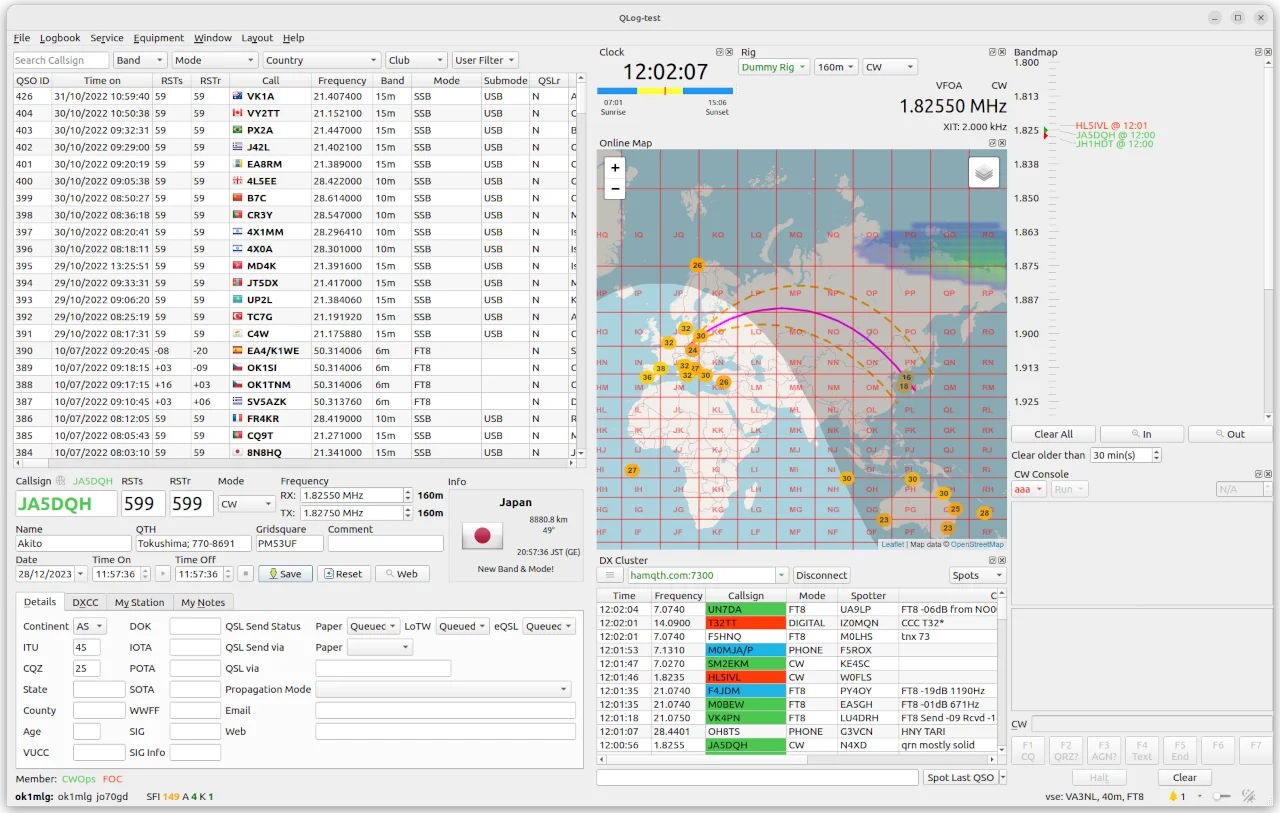
QLog is an open-source amateur radio (ham radio) logging application targeted at Linux and Windows users. Developed under the GPL-3.0 license and maintained on GitHub, it is built using the Qt cross-platform framework and stores all log data in a lightweight SQLite database, making it portable and easy to back up. The application features a fully customizable graphical user interface, allowing operators to tailor their workspace to their preferences. Rig control is a central capability, supported through Hamlib, Omnirig v1 and v2 (Windows only), TCI, and FLRig — covering a wide range of modern and legacy transceivers. Rotator control is equally well-supported via Hamlib and PSTRotator integration, enabling antenna direction management directly from the log. QLog integrates with popular online callsign lookup services, including HamQTH and QRZ, enabling automatic population of contact data during logging sessions. The software also supports multiple log formats, awards tracking, and internationalization (i18n), making it usable across different languages and regions. While QLog is not focused on contesting, it is an ideal daily driver for casual and serious operators who want a reliable, modern, and actively maintained desktop logbook. Its open-source nature means users can contribute features, report issues, or fork the project freely. With over 300 GitHub stars and active development, QLog is a well-regarded choice in the amateur radio community.
Key Features
- Rig Control: Control your transceiver directly from the logbook via Hamlib, Omnirig v1/v2, TCI, or FLRig for seamless frequency and mode logging.
- Rotator Control: Manage antenna rotators through Hamlib or PSTRotator integration, allowing directional tracking from within the application.
- Callsign Lookup Integration: Automatically populate contact details using HamQTH and QRZ.com lookups, speeding up log entries during operation.
- Customizable GUI: Fully adjustable graphical interface lets operators configure their workspace to match their operating style and preferences.
- SQLite Database Backend: All log data is stored in a local SQLite database, ensuring fast access, easy backup, and no cloud dependency.
Use Cases
- Logging daily amateur radio contacts (QSOs) with automatic rig frequency and mode capture.
- Managing antenna rotator direction for directional antenna users during DX chasing or satellite operation.
- Looking up and recording contact details automatically via HamQTH or QRZ during pile-up operations.
- Tracking awards progress by maintaining a structured, searchable log of contacts over time.
- Running a ham radio club or personal station on Linux with a reliable, locally-hosted logbook requiring no subscription or cloud service.
Pros
- Completely Free & Open Source: Licensed under GPL-3.0, QLog costs nothing and can be freely modified, audited, or contributed to by the community.
- Wide Rig & Rotator Support: Compatibility with Hamlib, Omnirig, TCI, FLRig, and PSTRotator covers the vast majority of modern transceivers and rotator controllers.
- Cross-Platform: Native support for both Linux and Windows ensures a consistent experience regardless of the operator's preferred OS.
- Active Development & Community: With 300+ GitHub stars and ongoing commits, QLog is actively maintained with regular improvements and bug fixes.
Cons
- No Contest Mode: QLog explicitly does not focus on contesting, so operators needing dedicated contest logging features will need a separate application.
- No macOS Support: The application currently targets Linux and Windows only, leaving macOS users without an official build.
- Requires Manual Setup: Configuring rig control, rotator interfaces, and callsign lookup credentials requires technical knowledge and manual setup steps.
Frequently Asked Questions
What operating systems does QLog support?
QLog officially supports Linux and Windows. There is no official macOS build at this time.
Is QLog free to use?
Yes, QLog is completely free and open-source, released under the GPL-3.0 license. You can download, use, and modify it at no cost.
What rig control interfaces does QLog support?
QLog supports rig control via Hamlib, Omnirig v1 (Windows only), Omnirig v2 (Windows only), TCI, and FLRig, covering a broad range of transceivers.
Can QLog look up callsign information automatically?
Yes, QLog integrates with HamQTH and QRZ.com for automatic callsign lookups, allowing contact details to be populated quickly during a logging session.
Does QLog support contest logging?
No. QLog is designed for general amateur radio logging and is not focused on contests. Operators requiring contest-specific features should use dedicated contest logging software.