
About
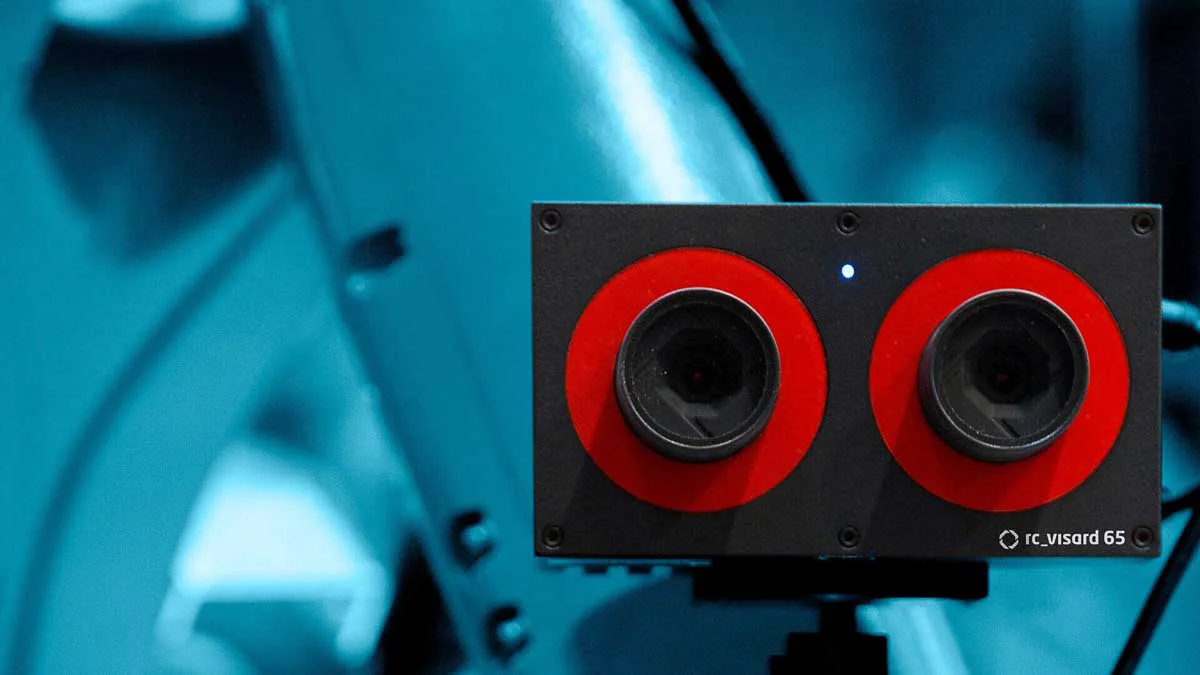
Roboception delivers end-to-end 3D robot vision solutions designed to give industrial robots reliable perception capabilities. At the hardware level, the company offers a family of 3D stereo sensors — the rc_visard NG, rc_visard, and rc_viscore — that capture precise depth data and can be installed without prior machine-vision expertise. On the software side, the rc_reason Suite provides a collection of plug-and-produce AI modules including CADMatch, SilhouetteMatchAI, ItemPickAI, BoxPick, SLAM, and TagDetect, each tailored to specific robotic manipulation and navigation tasks. A standout feature is the integrated UserSpace, which allows engineers to deploy custom Docker-containerized software directly on Roboception hardware — ideal for collision-free motion planning, vision pipelines, and Industry 4.0 applications without additional compute hardware. Edge computing is central to the architecture, processing data locally to achieve real-time decision-making with minimal latency. Connectivity is ensured through REST-API, ROS, and GenICam interfaces, making integration straightforward for robotics developers. The portfolio is intentionally modular and scalable: parameters and database items can be shared across installations, simplifying replication across production facilities. Roboception is best suited for industrial manufacturers, system integrators, and robotics engineers seeking production-grade, AI-enhanced vision for bin picking, quality inspection, assembly guidance, and autonomous navigation.
Key Features
- rc_reason AI Software Suite: A collection of plug-and-produce AI modules (CADMatch, ItemPickAI, BoxPick, SLAM, etc.) that provide grasp points and task-relevant data to the robot controller with minimal configuration.
- 3D Stereo Sensor Hardware: The rc_visard and rc_viscore sensor family captures high-fidelity depth data and can be set up without prior machine-vision expertise, enabling rapid deployment.
- Integrated UserSpace with Docker Support: Deploy custom software directly on Roboception hardware via Docker containers, supporting collision-free motion planning, custom vision pipelines, and Industry 4.0 applications.
- Edge Computing Architecture: Data is processed locally near or within the sensor, ensuring real-time decision-making, low latency, and greater system resilience without reliance on cloud connectivity.
- Multi-Protocol Connectivity: Supports REST-API, ROS, and GenICam interfaces for seamless integration with existing robot controllers and automation infrastructure.
Use Cases
- Bin picking and random part picking in manufacturing assembly lines using ItemPickAI and BoxPick modules
- CAD-based object detection and localization with CADMatch for precise robotic handling of known parts
- Autonomous mobile robot navigation using the integrated SLAM module for real-time mapping and localization
- Quality inspection and silhouette-based object detection in industrial production with SilhouetteMatchAI
- Custom vision pipeline deployment via Docker containers on Roboception hardware for Industry 4.0 applications
Pros
- Plug-and-Produce Ease of Use: Hardware and software are designed for rapid deployment with minimal machine-vision expertise required, reducing time-to-automation significantly.
- Modular and Scalable Portfolio: The modular architecture allows new components to be added to existing installations and enables easy replication across multiple production facilities.
- Powerful Edge Computing: On-device processing delivers real-time performance and low latency while reducing dependency on external servers or cloud infrastructure.
- Extensive AI Software Library: A broad suite of AI perception modules covers diverse use cases from bin picking to SLAM navigation, all optimized for industrial robotics.
Cons
- Enterprise Pricing with No Transparency: Pricing is inquiry-based with no public price list, making it difficult for smaller teams or projects to quickly evaluate cost-feasibility.
- Hardware Dependency: The full software suite is tightly coupled to Roboception's proprietary sensor hardware, limiting flexibility for teams that already have third-party depth cameras.
- Industrial Focus Limits General Use: The platform is purpose-built for manufacturing and industrial robotics, making it less suitable for research, consumer, or non-industrial robotic applications.
Frequently Asked Questions
What types of robots is Roboception compatible with?
Roboception's sensors and software integrate with a wide range of industrial robot controllers via REST-API, ROS, and GenICam interfaces, making them compatible with most major robot arm brands and automation platforms.
Do I need machine-vision expertise to set up Roboception products?
No. Roboception products are designed to be plug-and-produce, meaning installation and initial setup can be completed without prior experience or expertise in machine vision.
What is the UserSpace feature?
UserSpace is an integrated feature that allows users to deploy custom software directly on Roboception hardware using Docker containers, enabling custom vision pipelines, motion planning, and Industry 4.0 apps without additional hardware.
How does Roboception handle data processing?
Roboception uses edge computing, processing data locally near or within the 3D stereo sensor. This ensures real-time decision-making, minimal latency, and greater system resilience.
Can I scale my installation across multiple production sites?
Yes. The portfolio is modular and supports multiple upload and download options for sharing parameters and database items among vision systems, making replication straightforward across the same or different facilities.