
About
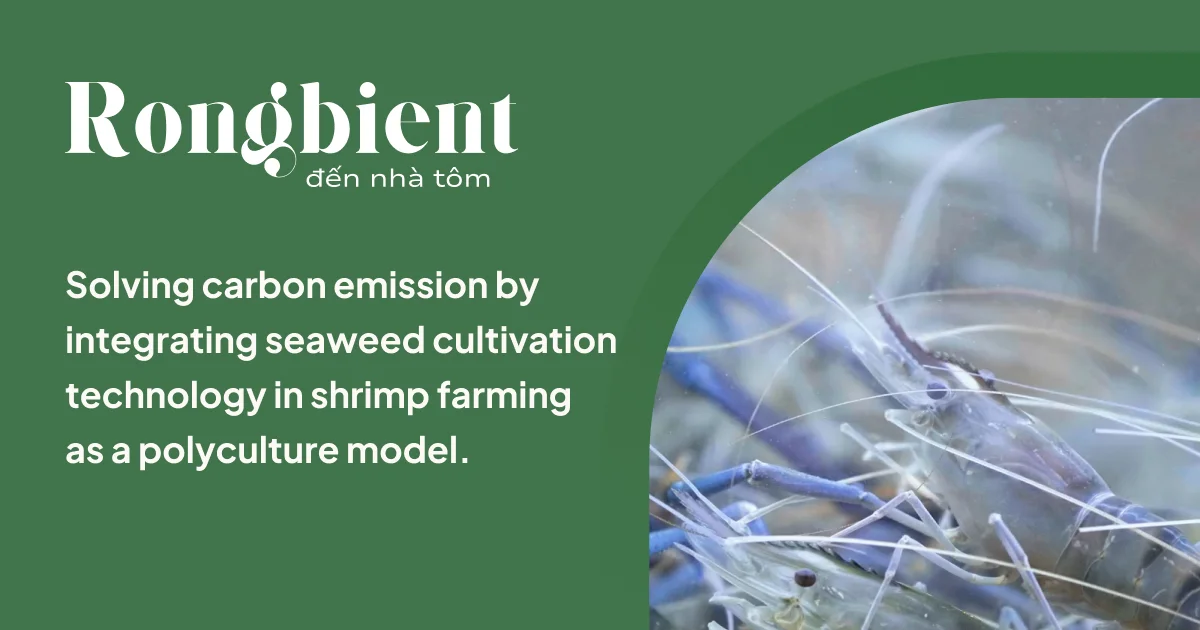
Rongbient is a Vietnam-based biotech and climate impact company addressing the environmental and economic challenges of the shrimp aquaculture industry. Shrimp farming in Vietnam generates nearly $9 billion per year but is associated with significant water pollution, high shrimp mortality rates, deforestation of mangroves, and excessive feed costs. Rongbient's core offering is a Seaweed Cultivation Technology system — long lines coated with red seaweed culture and attached to buoys — deployed either in filter tanks for intensive farms or directly within shrimp ponds for extensive farms. This setup acts as a natural biofilter, increases dissolved oxygen levels, enhances shrimp shell shedding, and improves shrimp diet and immunity. The system is a one-time installation that grows at 2–5% per day. Complementing this, Rongbient produces a dried red seaweed (Gracilaria) supplement pellet that can be mixed at a 5% ratio with regular feed. This supplement improves shrimp growth rates, reduces feed costs by up to 10%, and enhances disease immunity. On the environmental side, Rongbient's solutions contribute to blue carbon sequestration through seaweed biomass, reduce electricity and water consumption, lower mangrove deforestation risk, and minimize shrimp waste released into ecosystems. The company's roadmap targets offsetting 0.5% of global CO2 emissions by 2035. Rongbient works in partnership with Ho Chi Minh City University of Agriculture and Forestry and the Research Institute for Marine Fisheries.
Key Features
- Seaweed Long-Line Cultivation System: A one-time-setup system of red seaweed long lines and buoys deployed over shrimp ponds or filter tanks to naturally purify water and enhance the aquatic environment.
- Natural Biofilter & Oxygenation: Seaweed acts as a biological filter that removes waste from the water and increases dissolved oxygen levels, reducing the need for electricity-intensive aeration equipment.
- Seaweed-Based Feed Supplement: Dried Gracilaria processed into sinking pellets that can replace up to 5% of regular feed, cutting feed costs by up to 10% while boosting shrimp immunity and growth rates.
- Blue Carbon Sequestration: Seaweed biomass grown through the polyculture system sequesters CO2, contributing to verified blue carbon credits and environmental impact at scale.
- Disease Immunity Improvement: Seaweed integration into the shrimp diet and habitat strengthens post-larva shrimp immunity, directly reducing the high fatality rates common in conventional farming.
Use Cases
- Shrimp farmers in Vietnam looking to reduce water pollution and improve pond water quality through natural biofiltration.
- Aquaculture operations seeking to lower feed costs and improve shrimp growth rates and disease resistance.
- Climate-focused investors and agri-businesses aiming to generate blue carbon credits through certified seaweed cultivation programs.
- Extensive shrimp farms wanting to reduce mangrove deforestation by improving per-pond productivity and sustainability.
- Government agencies and NGOs funding sustainable aquaculture programs in Southeast Asia's coastal communities.
Pros
- Multi-layered Environmental Impact: Simultaneously addresses water pollution, carbon emissions, mangrove deforestation, and shrimp waste — delivering compounding sustainability benefits from a single system.
- Cost Reduction for Farmers: Reduces feed costs by up to 10% and lowers electricity and water use, directly improving profit margins for shrimp farmers operating on thin margins.
- Scalable Polyculture Model: Compatible with both intensive and extensive shrimp farming setups, making the solution accessible to a wide range of farm sizes and operation types.
- Research-Backed Approach: Developed in partnership with academic and government research institutions, lending scientific credibility to species selection and deployment methods.
Cons
- Niche Industry Focus: The solution is purpose-built for shrimp aquaculture in Southeast Asia, limiting its immediate applicability to other industries or geographies.
- Early-Stage Startup: As a young company, Rongbient may have limited deployment track records, case studies, or support infrastructure compared to established agri-tech providers.
- Physical Infrastructure Required: Farmers must install long-line seaweed systems on-site, which requires initial setup effort and may require behavioral change from traditional farming practices.
Frequently Asked Questions
What type of seaweed does Rongbient use in its systems?
Rongbient primarily uses red seaweed species, with Gracilaria being the main species used in the dried feed supplement pellets, selected in collaboration with the Research Institute for Marine Fisheries.
Is Rongbient's system suitable for both intensive and extensive shrimp farms?
Yes. The seaweed long-line system can be installed in filter tanks for intensive farms or directly within shrimp ponds for extensive farms, making it adaptable to different farming models.
How does Rongbient contribute to carbon offsetting?
Seaweed biomass grown through the polyculture system sequesters CO2 via blue carbon capture. Rongbient projects that at scale, its solutions could offset 0.5% of global CO2 emissions by 2035.
How much can Rongbient's feed supplement reduce costs?
Mixing dried seaweed pellets at a 5% ratio with regular shrimp feed can reduce total feed usage by up to 10%, which is significant given that feed often accounts for 50% of total farming costs.
Who are Rongbient's partners?
Rongbient works with Ho Chi Minh City University of Agriculture and Forestry, which assisted with farmer surveys and building a local partner network in Ca Mau, and the Research Institute for Marine Fisheries, which guided seaweed species selection and optimal growing conditions.