

About
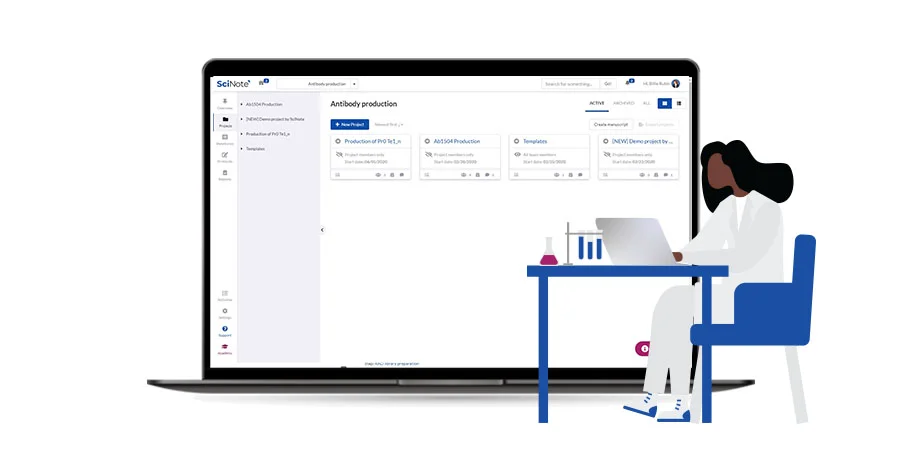
SciNote is a comprehensive cloud-based Electronic Lab Notebook (ELN) designed to modernize and streamline how scientific teams record, manage, and share research data. Trusted by regulatory agencies like the FDA and USDA, as well as researchers in biopharma, diagnostics, medical devices, agriculture, and academia across 100+ countries, SciNote replaces paper notebooks with a secure, searchable, and collaborative digital environment. The platform organizes work around a projects/experiments/tasks structure that mirrors how real research happens, making it intuitive to adopt. Researchers can write structured notes, attach files, images, and Excel sheets, create and reuse protocol templates, manage lab inventory, and auto-generate project reports—all within a single interface. Visualized workflows help teams understand how connected tasks fit together. SciNote places a strong emphasis on data integrity and regulatory compliance, offering built-in support for GxP practices and 21 CFR Part 11 requirements, including audit trails and electronic signatures. AI and automation features further reduce manual effort, while integrations and a full API allow connection to existing lab instruments and third-party tools. A free tier is available for individual researchers, with premium plans targeting teams and enterprise labs. Whether you're a solo scientist, a CRO, or a large biopharma organization, SciNote scales to fit your lab's size and compliance needs, delivering a measurable return on investment through improved efficiency, data security, and collaboration.
Key Features
- Electronic Lab Notebook: Capture and organize research notes, data, images, tables, and checklists in a structured projects/experiments/tasks hierarchy that mirrors how scientific research actually happens.
- Lab Inventory Management: Track reagents, samples, and equipment directly within the platform, linking inventory items to specific experiments and tasks for full traceability.
- 21 CFR Part 11 & GxP Compliance: Built-in audit trails, electronic signatures, and data integrity tools ensure compliance with FDA 21 CFR Part 11, GxP, and other regulatory standards.
- Protocol & SOP Management with Templates: Create, store, and reuse standardized protocols and SOPs. Replicate experiments quickly using templates and auto-generate project reports to accelerate documentation.
- Team Collaboration & Integrations: Share data securely across teams with role-based access controls, visualized task workflows, and integrations via a full API to connect lab instruments and third-party tools.
Use Cases
- Biopharma R&D teams replacing paper lab notebooks with a compliant, searchable digital system for GxP and 21 CFR Part 11 regulated environments.
- CROs and CDMOs managing multi-client research projects with structured workflows, SOPs, and role-based data access for audit readiness.
- Academic research groups organizing grant-funded experiments, tracking reagent inventory, and enabling reproducible research with reusable protocol templates.
- Medical device and diagnostics companies documenting development processes to meet regulatory submission requirements with full audit trails.
- Individual scientists and students maintaining a structured, searchable digital research record to replace scattered notebooks, spreadsheets, and email chains.
Pros
- Significant time savings: SciNote users save an average of 9 hours per week on data recording, searching, and reporting, delivering a fast return on investment.
- Regulatory compliance built-in: Native support for 21 CFR Part 11 and GxP compliance removes the complexity of meeting audit and data integrity requirements for regulated labs.
- Free tier for individuals: Individual researchers can get started at no cost, making it accessible to academics, students, and small labs without budget approval.
- Trusted by major agencies: Adoption by the FDA and USDA provides strong credibility and signals robust security and data protection standards.
Cons
- Cloud-dependent: As a primarily cloud-based solution, labs with strict data sovereignty requirements or limited internet access may face deployment challenges.
- Complexity for small labs: The full feature set—compliance tools, inventory, and workflow automation—may feel overwhelming for solo researchers or very small teams with simple needs.
- Advanced features behind paid plans: Compliance, team management, and advanced integrations require a paid subscription, which can be costly for budget-constrained academic labs.
Frequently Asked Questions
Is SciNote free to use?
Yes, SciNote offers a free plan for individual researchers. Teams and organizations requiring compliance features, advanced inventory management, and collaboration tools will need a paid subscription. A 14-day free trial of paid plans is also available.
Does SciNote support 21 CFR Part 11 compliance?
Yes, SciNote is designed with 21 CFR Part 11 compliance in mind, offering electronic signatures, audit trails, and data integrity features that meet FDA and GxP regulatory requirements.
What types of organizations use SciNote?
SciNote is used by a wide range of organizations including biopharma companies, CROs, CDMOs, medical device manufacturers, agricultural research teams, diagnostic labs, and academic institutions in over 100 countries—including the FDA and USDA.
Can SciNote integrate with other lab tools and instruments?
Yes, SciNote provides a full API and supports integrations with third-party tools and lab instruments, allowing teams to connect their existing software ecosystem with the ELN.
How does SciNote organize research data?
SciNote uses a projects/experiments/tasks hierarchy that mirrors how research is conducted. Within each task, users can add notes, protocols, inventory items, files, and results, and visualize how connected tasks relate to each other through workflow views.