

About
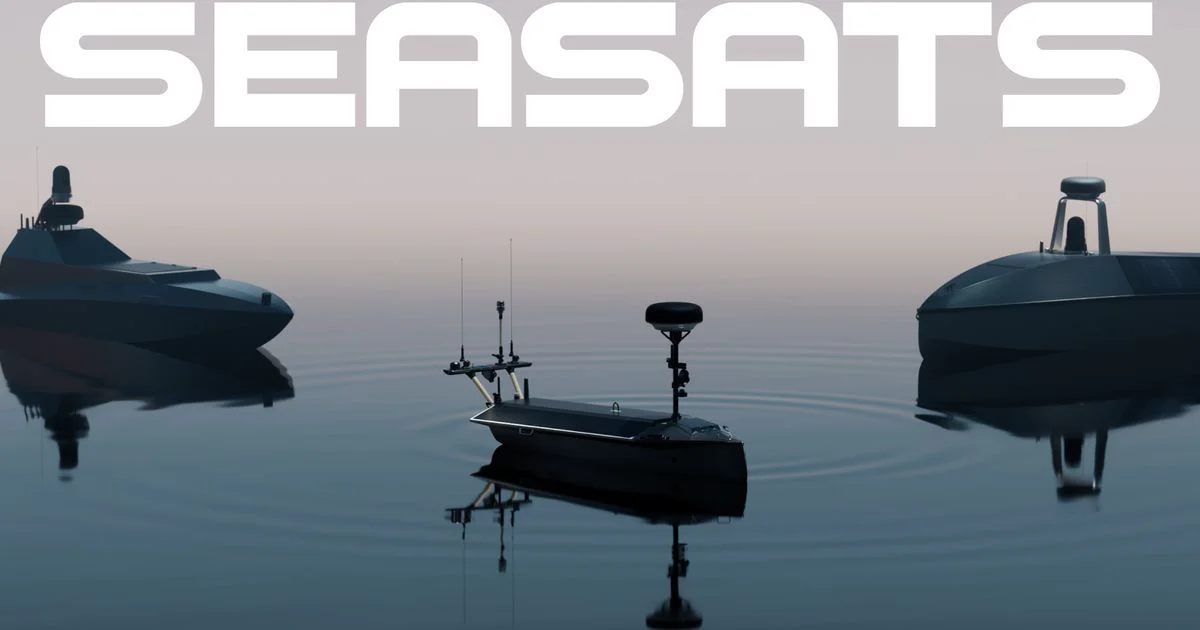
Seasats delivers a fleet of autonomous surface vehicles engineered for the toughest maritime environments. Designed for defense agencies, coast guards, and ocean research organizations, their vessels tackle missions ranging from submarine signal detection and illegal fishing surveillance to pipeline inspection and hurricane path tracking. The product line—Lightfish, Quickfish, and Heavyfish—scales from hand-deployable, single-operator units to larger interception and escort platforms. Each vessel features a modular payload system with a library of 50+ plug-and-play sensors, with custom payloads integrable within hours. Hybrid-fueled propulsion enables sustained deployments of up to 6 months, and the vessels remain operational at sea state 6 and under GPS-denied conditions. Built-in UAS (drone) launch capabilities support Group 1 and Group 2 unmanned aircraft for aerial overwatch and force projection. The platform sends real-time alerts directly to decision-makers via cell or email, enabling immediate coordinated responses. Vessels can cue sensors, intercept contacts, create protective escort buffers around critical infrastructure, or trigger manned responses. Low unit cost allows deployment at scale across vast ocean areas, while data-as-a-service options lower the barrier to entry. Seasats removes the need for specialist operators or multi-week training, making autonomous maritime intelligence accessible for rapid deployment anywhere in the world.
Key Features
- Rapid Hand Deployment: Vessels fit in the back of a pickup truck and can be launched by one or two people with no specialist training, enabling immediate field deployment anywhere in the world.
- 50+ Modular Payloads: A plug-and-play payload library covers maritime surveillance, subsea mapping, intelligence gathering, and more. Custom payloads can be integrated in hours or days.
- Up to 6-Month Endurance: Hybrid-fueled propulsion sustains operations for up to 6 months, with full capability at sea state 6 and under GPS-denied conditions.
- Real-Time Alerts & Response: Automated data alerts are delivered directly to decision-makers via cell or email, enabling instant cueing of sensors, drone launches, or manned interception responses.
- Ocean-Wide Sensor Networks: Low unit cost enables fleet-scale deployments that form distributed sensor networks across vast geographic areas for comprehensive maritime domain awareness.
Use Cases
- Defense agencies deploying persistent maritime surveillance networks to monitor coastlines, shipping lanes, and exclusive economic zones for threats.
- Coast guard and naval forces using autonomous vessels for illegal fishing detection, smuggling interdiction, and real-time alert-driven rapid response.
- Environmental and scientific organizations tracking hurricane paths, toxic algal bloom spread, and ocean conditions over multi-month deployments.
- Energy companies conducting subsea pipeline inspection and infrastructure monitoring in remote or hazardous offshore locations.
- Intelligence organizations gathering maritime domain awareness data—including submarine signals and ghost fleet tracking—across vast open-ocean areas.
Pros
- Minimal Operator Training Required: Intuitive design means no specialists or multi-week training programs are needed, dramatically lowering time-to-deployment for defense and civilian teams.
- Highly Scalable and Affordable: Priced to avoid procurement red tape, with immediate stock and data-as-a-service options, making large-scale maritime coverage financially feasible.
- Extreme Environmental Durability: Operable at sea state 6 and during GPS denial, the vessels maintain mission capability in conditions that challenge most conventional platforms.
- Versatile Multi-Mission Platform: From submarine detection and hurricane tracking to illegal fishing interdiction and pipeline inspection, a single vehicle type supports a wide range of critical missions.
Cons
- Enterprise/Government Market Only: Products and pricing are targeted at defense agencies and large organizations, making them inaccessible to smaller commercial or research teams.
- Limited Public Pricing Transparency: Specific unit costs and data-as-a-service pricing are not publicly listed, requiring direct engagement for procurement evaluation.
- Hardware Logistics Complexity: Despite compact sizing, coordinating international shipping, customs, and field logistics for physical vessels adds operational overhead compared to pure software solutions.
Frequently Asked Questions
What types of missions can Seasats vehicles support?
Seasats vehicles are designed for maritime domain awareness, intelligence and surveillance, subsea mapping, illegal fishing detection, submarine signal monitoring, hurricane tracking, pipeline inspection, and escort/interception operations.
How long can a Seasats vessel operate without resupply?
Each vessel is hybrid-fueled and capable of sustained missions up to 6 months, remaining operational at sea state 6 conditions and under GPS-denied environments.
Do operators need specialized training to deploy the vehicles?
No. The vehicles are built to be simple and intuitive. Lightfish can be deployed by hand with one or two people, and no specialist training or multi-week courses are required.
Can I add custom sensors or payloads to the vehicles?
Yes. The modular payload system supports a library of 50+ plug-and-play payloads. Custom or third-party payloads can typically be integrated within hours to days.
Is data-as-a-service available, or must I purchase the vehicles outright?
Seasats offers a data-as-a-service model alongside direct vehicle purchase, allowing organizations to access maritime intelligence without managing the hardware themselves.