

About
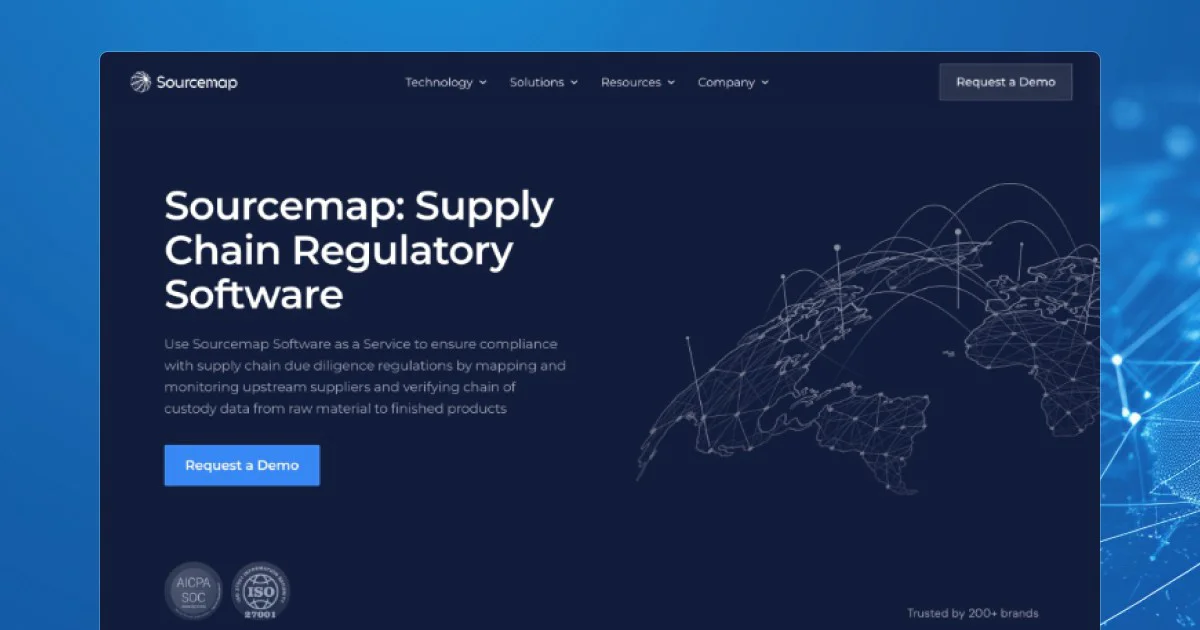
Sourcemap is the leading supply chain transparency and due diligence platform, originally developed at MIT and trusted by some of the world's most complex global supply chains. The platform enables companies to map every tier of their supply chain—from finished goods all the way back to raw material origins—collecting verifiable supplier data and transaction documents along the way. Sourcemap automates sub-supplier discovery and continuous supplier watchlist monitoring, making it straightforward to detect and respond to forced labor risks in line with U.S. (UFLPA), Canadian, and EU importer guidance. Its mock detention feature allows compliance teams to test readiness before CBP inquiries arise. For tariff and customs compliance, Sourcemap maps steel, aluminum, copper, and critical minerals to the exact processing stage—melt, pour, smelt, and cast—required for origin determination and Section 232 tariff exemptions. It assembles complete chain-of-custody documentation across every tier for rapid customs response. The platform is proven with automotive OEMs, semiconductor manufacturers, solar producers, and large infrastructure suppliers. Key capabilities include transaction-level traceability, automated supplier data collection, audit-ready compliance documentation, and integration-ready APIs for enterprise environments. Sourcemap is the go-to solution for enterprises navigating complex, multi-tier global supply chain regulations.
Key Features
- Multi-Tier Supply Chain Mapping: Map products from finished goods to raw materials across every supplier tier with automated sub-supplier discovery.
- Forced Labor Due Diligence: Continuous supplier watchlist monitoring and transaction-level chain-of-custody traceability aligned with UFLPA, Canadian, and EU forced labor guidance.
- Tariff & Customs Compliance: Map critical minerals and metals (steel, aluminum, copper) to exact processing stages for Section 232 exemptions and rapid customs response.
- Mock Detention Testing: Simulate CBP detention scenarios to test compliance readiness before actual government inquiries occur.
- Audit-Ready Documentation: Collect and assemble verifiable supplier data and transaction documents at every tier for complete chain-of-custody records.
Use Cases
- An automotive OEM uses Sourcemap to map steel and aluminum suppliers down to the smelting stage to qualify for Section 232 tariff exemptions and respond rapidly to customs inquiries.
- A solar panel manufacturer leverages Sourcemap to continuously monitor its supply chain for forced labor risks and maintain UFLPA compliance documentation across all tiers.
- A semiconductor company uses Sourcemap to discover and onboard sub-suppliers of critical minerals, building a complete chain-of-custody audit trail for regulators.
- An infrastructure supplier runs mock CBP detention simulations in Sourcemap to identify compliance gaps before actual government enforcement actions.
- A global retailer uses Sourcemap to collect verifiable supplier data and transaction documents across its supply chain to satisfy EU due diligence regulatory requirements.
Pros
- Deep Multi-Tier Visibility: Goes beyond tier-1 suppliers to map entire supply chains down to raw material origins, enabling true end-to-end transparency.
- Regulatory Alignment: Built specifically to address U.S., Canadian, and EU forced labor and tariff regulations, reducing legal and compliance risk.
- Enterprise Proven: Trusted by automotive OEMs, semiconductor manufacturers, and major infrastructure suppliers in complex global supply chains.
- Automated Workflows: Reduces manual effort with automated sub-supplier discovery, watchlist monitoring, and document collection.
Cons
- Enterprise Pricing: Positioned as an enterprise solution with demo-based sales, making it inaccessible for small businesses or startups.
- Onboarding Complexity: Deep multi-tier supply chain mapping requires significant initial data collection and supplier onboarding effort.
- Limited Public Pricing Transparency: No self-service pricing or free tier is publicly available; access requires a sales demo request.
Frequently Asked Questions
What is Sourcemap used for?
Sourcemap is used to map and trace supply chains from finished goods to raw materials, enabling companies to comply with forced labor laws, tariff regulations (Section 232), and customs requirements.
How does Sourcemap help with forced labor compliance?
Sourcemap continuously monitors suppliers against watchlists, collects transaction-level chain-of-custody data, and aligns with U.S. (UFLPA), Canadian, and EU forced labor importer guidance. It also offers mock detention simulations to test compliance readiness.
Which industries use Sourcemap?
Sourcemap is proven with automotive OEMs, semiconductor manufacturers, solar producers, and large infrastructure suppliers that require deep supply chain visibility and regulatory compliance.
What is Section 232 compliance and how does Sourcemap support it?
Section 232 refers to U.S. tariffs on steel and aluminum imports. Sourcemap maps metals to exact processing stages (melt, pour, smelt, cast) required for origin determination and collects transaction documents to support tariff exemption claims.
Is Sourcemap available as an API?
Yes, Sourcemap provides API access for enterprise integrations, allowing companies to connect supply chain data with existing ERP, compliance, and procurement systems.