
About
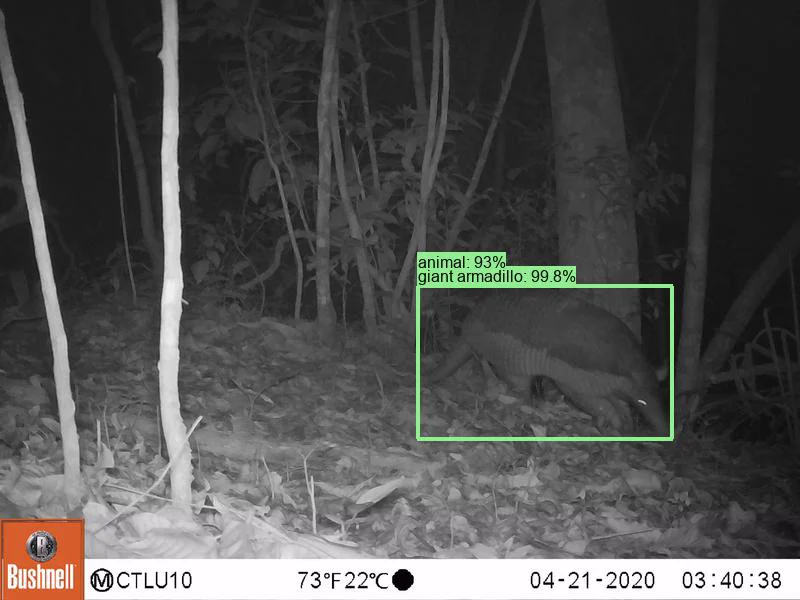
SpeciesNet is an open-source AI toolkit built by Google that leverages an ensemble of computer vision models to identify and classify wildlife species from camera trap (motion-triggered camera) imagery. Designed for researchers, conservationists, and data scientists, SpeciesNet automates the historically time-intensive task of manually reviewing thousands of wildlife photos. The system combines multiple AI models in an ensemble architecture, improving classification accuracy and reducing false positives commonly associated with single-model approaches. Users can run the full ensemble or individual components separately, and the tool supports GPU acceleration for faster processing on large datasets. SpeciesNet is distributed as a Python package, making it straightforward to integrate into existing data pipelines and research workflows. It includes detailed model cards, Jupyter notebooks for exploration, downloadable model weights, and utilities for visualizing outputs. The ensemble decision-making logic is transparent and configurable. Key use cases include automated biodiversity surveys, wildlife population monitoring, conservation project data analysis, and environmental impact assessments. SpeciesNet is particularly valuable for organizations processing large volumes of camera trap images where manual review would be impractical. With 500+ GitHub stars, active community contributions, and Google's backing, SpeciesNet represents a production-grade solution for computational ecology. It is suitable for academic researchers, NGOs, government wildlife agencies, and any team working with camera trap data at scale.
Key Features
- Ensemble AI Classification: Combines multiple AI models into an ensemble for more accurate and robust wildlife species identification compared to single-model approaches.
- Camera Trap Optimized: Purpose-built for motion-triggered wildlife camera imagery, handling common challenges like partial occlusion, night vision, and variable lighting.
- GPU Acceleration: Supports GPU inference to dramatically speed up processing of large-scale camera trap datasets with thousands of images.
- Modular Pipeline: Run the full ensemble or each model component separately, giving researchers flexibility to customize the classification workflow.
- Downloadable Model Weights & Model Cards: Provides direct access to pre-trained model weights and transparent model cards documenting training data, performance metrics, and limitations.
Use Cases
- Automated species identification in large-scale wildlife monitoring programs using thousands of camera trap images
- Biodiversity surveys for conservation organizations tracking animal populations across protected areas
- Environmental impact assessments requiring evidence of wildlife presence or absence in specific habitats
- Academic research in computational ecology, studying animal behavior patterns and seasonal movement via camera trap data
- Government or NGO wildlife agency workflows replacing or augmenting manual image review with AI-assisted classification
Pros
- Free and Open Source: Released under the Apache-2.0 license by Google, making it freely usable for both academic and commercial wildlife monitoring projects.
- High Accuracy via Ensemble Design: The multi-model ensemble approach increases classification reliability and reduces errors compared to deploying a single AI model.
- Well-Documented with Notebooks: Includes Jupyter notebooks, model cards, and detailed documentation to help researchers get started quickly and understand model behavior.
- Backed by Google Research: Developed and maintained by Google, ensuring a high standard of model quality and ongoing community engagement.
Cons
- Requires Python Technical Setup: Users must configure a Python environment and manage dependencies, which may be a barrier for non-technical conservation staff.
- Domain-Specific Use Case: Designed exclusively for camera trap wildlife imagery; not suitable for general-purpose animal detection in other photographic contexts.
- No GUI or Web Interface: There is no graphical user interface — all interaction is via command line or Python API, limiting accessibility for non-developers.
Frequently Asked Questions
What is SpeciesNet?
SpeciesNet is an open-source ensemble of AI models developed by Google for classifying animal species in images taken by motion-triggered wildlife cameras (camera traps).
Is SpeciesNet free to use?
Yes. SpeciesNet is released under the Apache-2.0 open-source license and is completely free to use for both research and commercial purposes.
How do I install SpeciesNet?
SpeciesNet is distributed as a Python package. You need to set up a Python environment as described in the repository's documentation, then install it via the provided pyproject.toml configuration.
Does SpeciesNet support GPU acceleration?
Yes, SpeciesNet supports GPU inference, which significantly speeds up processing when working with large volumes of camera trap images.
Can I run individual model components separately?
Yes. While SpeciesNet is designed as an ensemble, the architecture allows users to run each model component independently for custom or experimental workflows.