

About
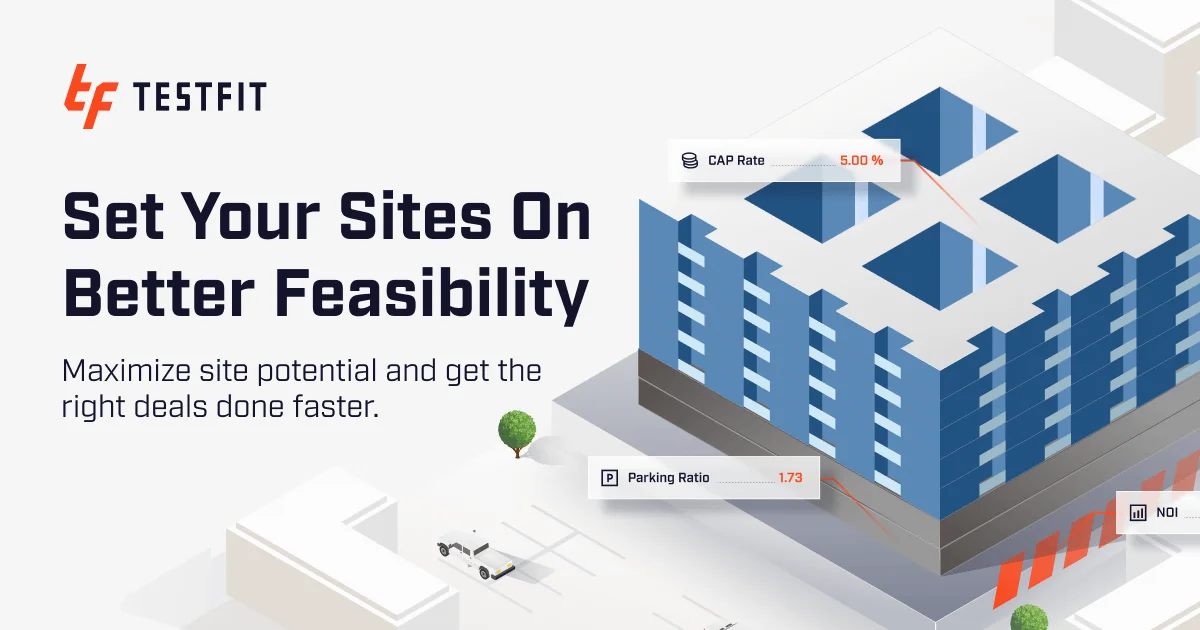
TestFit is an AI-driven real estate feasibility platform designed to accelerate site planning and deal evaluation for the entire development team. By leveraging generative design, TestFit can produce optimized site layouts—complete with road layouts, turning radii, topography data, unit mixes, and parking ratios—in a fraction of the time traditional workflows require, often cutting weeks of work down to hours. The platform allows users to map parcels or draw custom boundaries for any typology, including multi-family, single-family, industrial, data centers, retail, hotel, and parking structures. Its real-time deal prototyping engine validates pro formas against actual site layouts so teams know whether a deal pencils before design work begins. Users can generate and compare multiple design schemes simultaneously, enabling 2–3x more iterations on a fixed budget. TestFit also supports 3D visualization and massing for faster stakeholder approvals, and integrates directly with industry-standard tools such as Revit, AutoCAD, SketchUp, and Excel. Automated quantity takeoffs for parking, infrastructure, and earthwork provide early cost insights that reduce scope risk downstream. Built for developers, architects, contractors, civil engineers, urban planners, city planners, brokers, universities, and municipalities, TestFit compresses the feasibility cycle so deal teams can focus capital on the most promising opportunities with financial confidence.
Key Features
- Generative Site Planning AI: Automatically generates optimized site layouts for any typology—including multi-family, industrial, and data centers—with customizable road layout, turning radius, and topography data.
- Real-Time Pro Forma Validation: Validates financial models against actual site layouts so developers know if a deal pencils before committing to design, reducing investment risk.
- 3D Massing & Visualization: Produces 3D site models and massing studies with contextual data, enabling faster stakeholder buy-in and regulatory approvals.
- Automated Quantity Takeoffs: Instantly generates takeoffs for parking, infrastructure, and earthwork to surface early cost insights and avoid expensive scope changes later.
- Multi-Platform Integrations: Pushes approved layouts directly to Revit and exports to AutoCAD, SketchUp, Excel, and PDF for seamless collaboration across the deal team.
Use Cases
- Real estate developers rapidly vetting land acquisition opportunities to identify which deals pencil before committing capital
- Architects generating multiple massing and site layout options for client presentations faster and at lower cost
- Contractors producing early quantity takeoffs for parking, grading, and infrastructure to assess project scope and risk
- Civil engineers validating zoning impacts, cut-and-fill estimates, and grading scenarios without manual calculations
- Urban planners and municipalities evaluating development scenarios across parcels using massing tools and zoning data
Pros
- Dramatic Time Savings: Site planning tasks that traditionally take weeks can be completed in hours, with users reporting feasibility studies completed in 30–60 minutes with 10–15% accuracy margins.
- More Design Iterations Per Budget: Teams report generating 2–3x more alternative models on the same fixed budget, enabling better decision-making without additional cost.
- Financial and Design Alignment: Simultaneous pro forma and layout optimization ensures design decisions are grounded in financial reality from the very start of a project.
- Broad Typology and Role Support: Covers a wide range of building types and serves every member of the deal team—from developers and architects to civil engineers and city planners.
Cons
- Opaque Pricing: Pricing is not publicly listed; prospective users must contact sales, which can slow procurement for smaller firms or independent practitioners.
- Enterprise-Focused Scope: The platform's depth and pricing are geared toward professional development teams, making it potentially over-engineered or cost-prohibitive for solo practitioners or small projects.
- Requires Workflow Adoption: Getting full value from integrations with Revit and other tools requires teams to adapt existing workflows and invest time in onboarding and training.
Frequently Asked Questions
What building typologies does TestFit support?
TestFit supports a wide range of typologies including multi-family, single-family, industrial, data centers, retail, hotel, and parking structures.
Which design and analysis tools does TestFit integrate with?
TestFit integrates directly with Revit for design handoff and supports export to AutoCAD, SketchUp, Excel, and PDF for collaboration with consultants and stakeholders.
How accurate are the feasibility results?
According to customer testimonials, massing and yield results are typically within a 10–15% margin of error, which is sufficient for early-stage deal evaluation and investment committee presentations.
Who is TestFit designed for?
TestFit is built for the full real estate deal team, including developers, architects, contractors, civil engineers, urban planners, city planners, brokers, universities, and municipalities.
How much faster is site planning with TestFit compared to traditional methods?
TestFit is marketed as being up to 4x faster, with users completing site plans in hours that would traditionally take weeks. Some users report going from site analysis to feasibility output in under an hour.