
About
UXsniff is an AI-powered UX analytics platform designed to help product and UX teams understand the real impact of changes they ship. Unlike traditional analytics tools that tell you what happened but not why, UXsniff focuses on the change-to-impact pipeline: automatically detecting when something in the experience has changed, comparing user behavior before and after, and prioritizing the few insights worth your attention. Its core capabilities include Change Radar, which continuously monitors your site for UX changes and flags those aligned with behavioral shifts; Retro A/B (Time-Travel A/B Testing), which lets teams run retrospective comparisons using real historical data without requiring any pre-planned experiment setup; and Impact Reports, which summarize what changed, where, and what likely mattered most. Executive Summaries give leadership quick change awareness without manual monitoring. UXsniff complements—rather than replaces—traditional A/B testing tools by covering the gaps when changes ship without a test. It's backed by heatmaps and session recordings that provide supporting evidence without requiring teams to manually watch every replay. With over 13,000 teams using the platform, UXsniff is built for product managers, UX designers, and growth teams who need faster, evidence-based decisions when metrics move after a release.
Key Features
- Change Radar: Continuously and automatically detects UX changes on your site, flagging those that correlate with shifts in user behavior so you catch regressions earlier.
- Retro A/B Testing (Time-Travel A/B): Compare user behavior before and after any change using real historical data—no pre-planned experiment or traffic split required.
- Impact Reports: Automatically summarizes what changed, connects those changes to behavioral signals, and highlights what most likely mattered, supported by heatmaps and recordings.
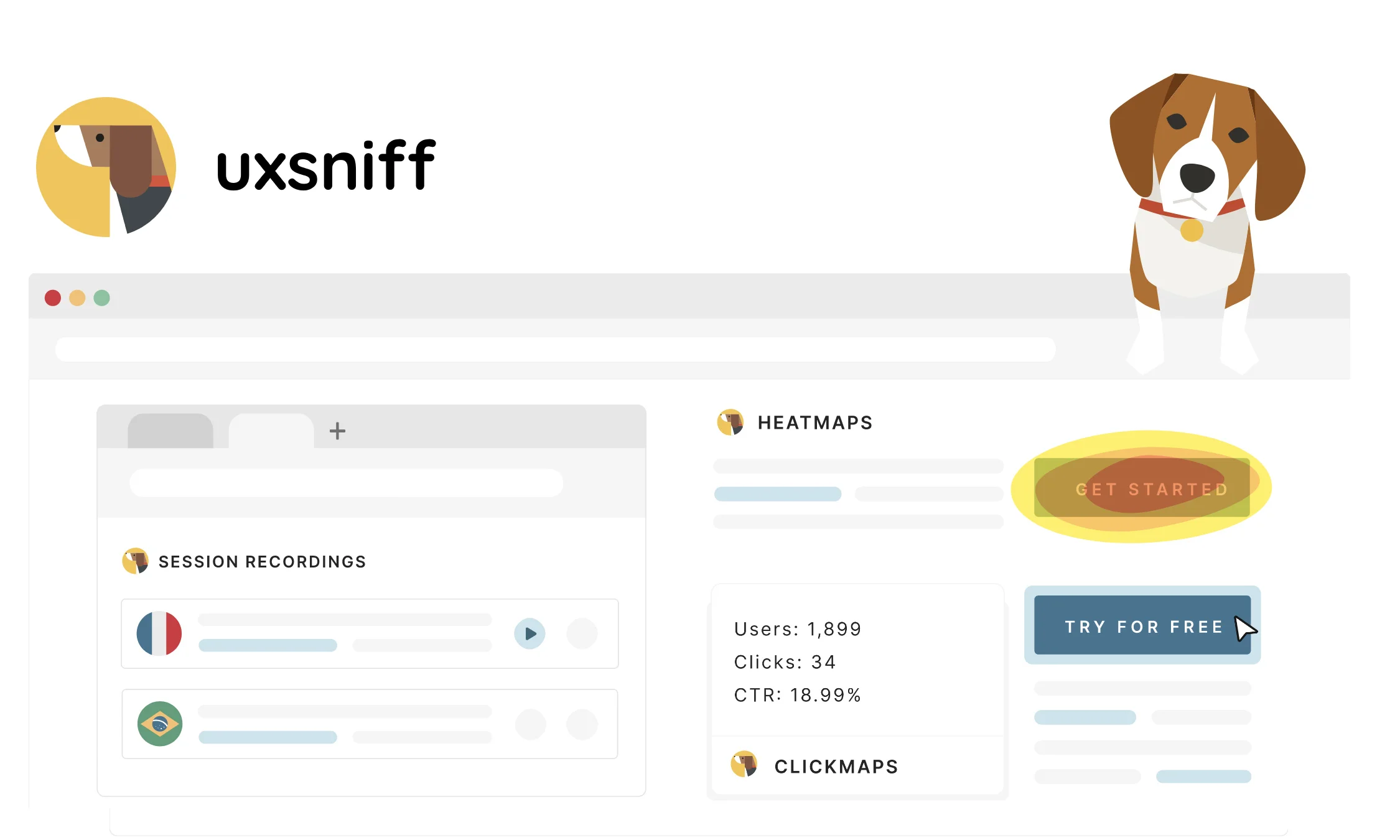
- Heatmaps & Session Recordings: Provides raw visual evidence of how users interact with your pages, serving as supporting data for automated impact findings without requiring you to watch every replay.
- Executive Summary: Delivers concise before/after comparisons and change awareness for leadership without requiring manual monitoring or dashboard analysis.
Use Cases
- Detecting UX regressions automatically after a product release without waiting for KPI drops to trigger an investigation.
- Understanding why conversion or engagement metrics changed following a quiet release that had no pre-planned A/B test.
- Generating before/after behavioral comparisons for stakeholders or executives after a redesign or feature update.
- Replacing lengthy manual dashboard reviews and session replay marathons with AI-summarized impact reports.
- Identifying which specific UX change among multiple simultaneous updates most likely drove a shift in user behavior.
Pros
- No experiment setup needed: Retro A/B analysis works on historical data, so teams can investigate impact even when no test was configured before a change shipped.
- Automated change detection: Change Radar removes the manual burden of tracking what changed, surfacing relevant signals proactively rather than waiting for KPI drops.
- Evidence-backed insights: Combines quantitative behavior comparisons with qualitative heatmaps and recordings, reducing debate and accelerating root-cause analysis.
- Complements existing A/B tools: Fills the gaps when changes ship without a pre-planned test, making it additive to existing experimentation workflows rather than a replacement.
Cons
- Requires existing traffic data: Retro A/B and behavior comparisons rely on historical user data, making the tool less useful for brand-new sites with little traffic.
- Post-ship focused: UXsniff is designed for analyzing changes after they go live, not for pre-launch experimentation or predictive testing.
- Not a standalone experimentation platform: For deliberate, pre-planned A/B tests with statistical rigor, teams will still need a dedicated experimentation tool alongside UXsniff.
Frequently Asked Questions
What is UXsniff and who is it for?
UXsniff is an AI-powered UX analytics platform for product managers, UX designers, and growth teams. It automatically detects UX changes, compares user behavior before and after, and explains what impacted metrics—helping teams make faster, evidence-based decisions.
How does Change Radar work?
Change Radar continuously monitors your website for UX changes and automatically flags those that align with shifts in user behavior. This helps teams detect regressions or impactful updates sooner, without relying on release notes or manual investigation.
What is Retro A/B (Time-Travel A/B) testing?
Retro A/B lets you compare user behavior before and after a change using real historical data—without needing to have set up an experiment in advance or split traffic. It's ideal for understanding the impact of releases that shipped without a formal test.
Does UXsniff replace traditional A/B testing tools?
No. UXsniff complements A/B testing by covering gaps when changes ship without a pre-planned test. Traditional A/B tools are still best for deliberate, pre-planned experiments. UXsniff handles the 'what actually happened' after unplanned or quiet releases.
Is UXsniff free to use?
UXsniff offers a free plan to get started. Paid plans are available for teams that need more advanced features, higher usage limits, or access to the full suite of analytics and reporting tools.