

About
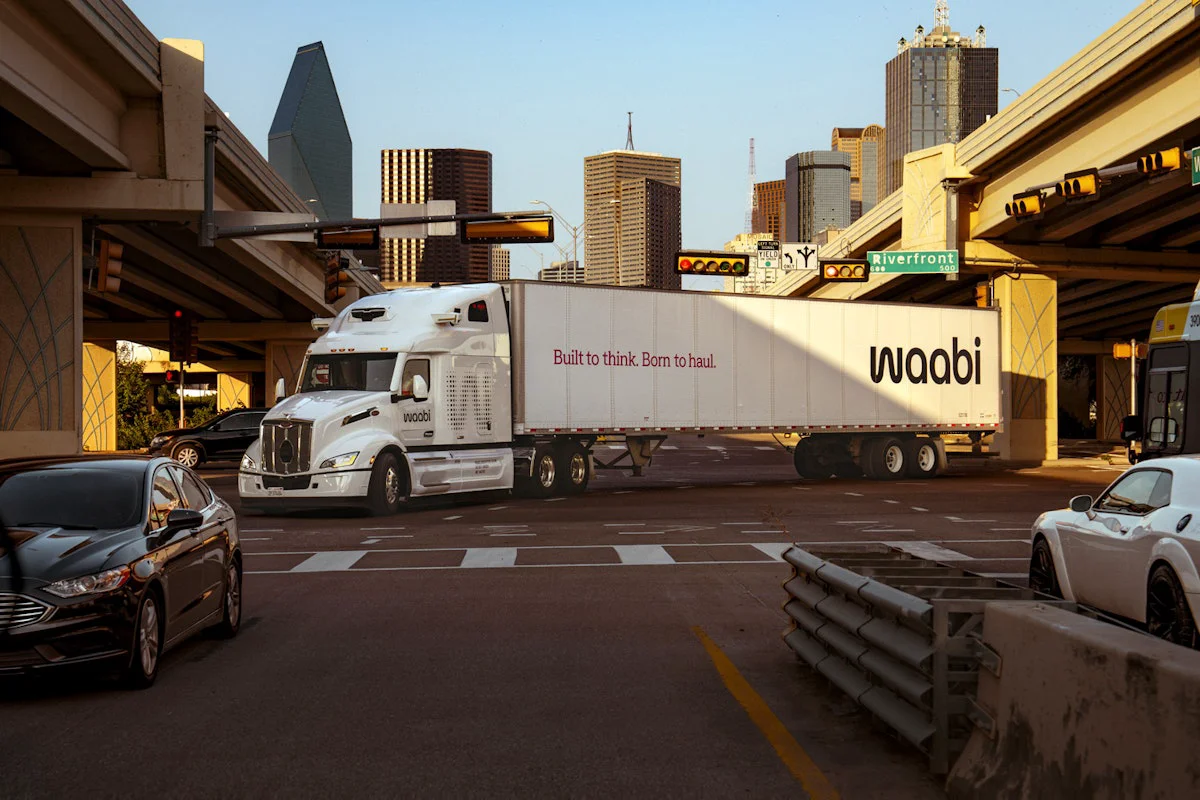
Waabi is a Physical AI company building the future of autonomous transportation, starting with long-haul trucking. Its revolutionary Physical AI Platform features a single, verifiable end-to-end AI model that acts as a shared brain powering both autonomous trucks and robotaxis — enabling generalization across different form factors, geographies, and environments for the first time. At the core of Waabi's approach is an advanced neural simulator that dramatically reduces development time and resources needed to validate autonomous vehicle behavior before public deployment. This simulation-first methodology sets a new safety standard for the entire AV industry, combining rigorous virtual testing with real-world validation. The platform supports both highway and surface street driving capabilities, enabling an unprecedented Direct-to-Customer (D2C) trucking model and seamless market entry into robotaxis. Waabi's technology is trusted by leading industry partners including Volvo Autonomous Solutions, Uber Freight, and NVIDIA. With $1 billion in recent funding and partnerships with top OEMs, logistics providers, and hardware companies, Waabi is positioned to lead the commercial deployment of autonomous transportation. The company targets logistics operators, fleet managers, carriers, and retailers looking to unlock the full potential of driverless freight and transportation.
Key Features
- End-to-End Physical AI Model: A single, verifiable AI model serves as a shared brain for both autonomous trucks and robotaxis, enabling reasoning and generalization across environments and form factors.
- Industry-Leading Neural Simulator: Waabi World — the most realistic neural simulator in the AV industry — enables simulation-first validation, drastically reducing time and cost to deploy safe autonomous vehicles.
- Highway & Surface Street Capability: Full autonomous driving support for both highway long-haul routes and complex surface street navigation, enabling a Direct-to-Customer trucking model.
- Mixed Reality Testing: Innovative MR-based safety testing that blends physical and virtual environments to push the boundaries of AV validation beyond what traditional testing allows.
- Multi-Vertical Scalability: The same AI platform powers multiple verticals — autonomous trucks and robotaxis — allowing commercial operators to deploy at scale across use cases and geographies.
Use Cases
- Long-haul autonomous freight transport for logistics and carrier companies seeking to reduce costs and driver dependency.
- Direct-to-Customer trucking operations where autonomous vehicles handle end-to-end delivery from warehouse to retail destination.
- Robotaxi fleet deployment in urban and suburban environments leveraging the same shared AI model as the trucking platform.
- AI-driven simulation and safety validation for automotive OEMs and AV developers looking to benchmark against neural simulator standards.
- Enterprise partnerships for retailers, logistics providers, and carriers seeking to integrate autonomous transportation into their supply chains.
Pros
- Simulation-First Safety: Waabi's neural simulator enables exhaustive safety validation before real-world deployment, setting a new industry benchmark for AV safety standards.
- Unified AI Architecture: A single shared AI model powering both trucking and robotaxi verticals accelerates development and reduces operational complexity at scale.
- Strong Industry Partnerships: Backed by and integrated with Volvo, Uber Freight, and NVIDIA — ensuring hardware compatibility and enterprise-grade logistics ecosystem support.
- Massive Funding & Commercial Momentum: Over $1 billion raised as of early 2026 signals strong investor confidence and a clear path to large-scale commercial deployment.
Cons
- Highly Specialized & Enterprise-Only: Waabi is not a general-purpose software tool — it's an enterprise-level AV platform requiring deep partnerships and infrastructure investments to adopt.
- Limited Public Accessibility: There is no self-serve API or developer sandbox; access is gated through partnerships and commercial agreements, limiting independent experimentation.
- Narrow Industry Focus: Currently focused on trucking and robotaxi verticals, which may limit applicability for organizations outside logistics, freight, or ride-hailing.
Frequently Asked Questions
What is Waabi's Physical AI Platform?
Waabi's Physical AI Platform is a next-generation autonomous vehicle technology stack featuring a single end-to-end AI model that powers both autonomous trucks and robotaxis, combined with a highly realistic neural simulator for safe and scalable deployment.
How does Waabi ensure the safety of its autonomous trucks?
Waabi uses a simulation-first approach powered by its Waabi World neural simulator, which creates highly realistic virtual environments for exhaustive testing. This is combined with Mixed Reality Testing and rigorous real-world validation before any public road deployment.
Who are Waabi's key partners?
Waabi partners with leading industry players including Volvo Autonomous Solutions (joint AV development and deployment), Uber Freight (logistics and routing), and NVIDIA (AI hardware and compute infrastructure).
What makes Waabi different from other autonomous vehicle companies?
Unlike approaches that rely on rule-based systems or separate models, Waabi uses a unified, interpretable, and verifiable end-to-end AI model. Its neural simulator enables scale that competitors cannot achieve with traditional testing methods, dramatically reducing time-to-deployment.
What is the Direct-to-Customer trucking model Waabi enables?
Waabi's surface street and highway driving capabilities together enable a Direct-to-Customer (D2C) autonomous trucking model, where freight can be transported from origin to destination without driver handoffs — a first for the industry.