
About
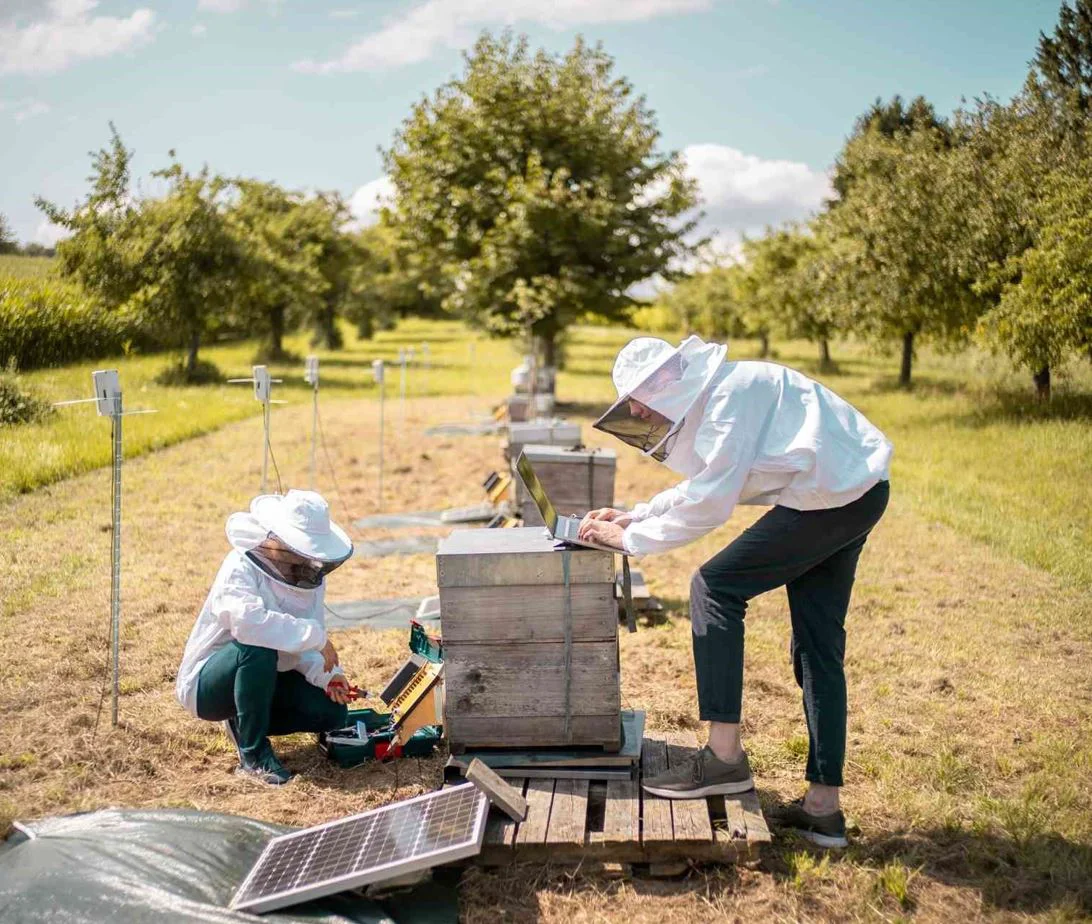
apic.ai is a leading agroscience technology company that delivers automated pollinator monitoring through advanced computer vision and AI. The platform treats bees as living biosensors, continuously capturing and quantifying behavioral parameters at hive entrances with a level of precision previously unachievable through manual observation. Core measurements include colony activity (bees entering and exiting the hive per time interval), foraging behavior, pollen color diversity, individual size determination, and mortality tracking — the latter being developed to align with EFSA Guidance for pesticide risk assessments. All methods are scientifically validated and results are verifiable and reproducible. By deploying edge computing directly at the monitoring site, apic.ai enables real-time, autonomous data collection without relying on constant cloud connectivity. The system is capable of detecting even minor effects caused by agrochemicals, farming practices, or environmental stressors on pollinator populations. The primary audience includes agrochemical companies needing regulatory-grade ecotoxicology data, agricultural businesses seeking to assess environmental impact, research institutions studying pollinator health, and habitat managers aiming to make pollinator-informed decisions. apic.ai offers personalized demonstrations and works closely with clients to tailor monitoring programs to specific research or compliance needs.
Key Features
- Automated Activity Monitoring: Continuously counts the number of bees and bumblebees entering and leaving the hive within configurable time intervals, providing a real-time pulse on colony health.
- Computer Vision Behavioral Analysis: Uses AI-powered image processing to detect and quantify subtle behavioral changes caused by agrochemicals, environmental stressors, or farming practices.
- Pollen Diversity Tracking: Identifies and categorizes pollen color on returning foragers to assess forage diversity and landscape-level floral resources available to pollinators.
- Mortality Detection: Tracks bees that leave the hive but do not return to flag increased mortality events, with ongoing refinement to meet EFSA pesticide risk assessment standards.
- Edge Computing Deployment: Processes data directly at the monitoring site via edge computing, enabling reliable, autonomous operation without constant cloud connectivity.
Use Cases
- Agrochemical companies assessing the ecotoxicological impact of pesticides on bee colonies for regulatory submissions.
- Agricultural businesses monitoring pollinator activity across farm landscapes to evaluate and improve habitat conditions.
- Research institutions conducting long-term studies on the effects of environmental stressors, land-use changes, or climate on pollinator health.
- Environmental consultancies providing pollinator impact assessments for infrastructure or land development projects.
- Crop producers optimizing pollination services by tracking forager activity and pollen diversity to ensure sufficient colony health during flowering seasons.
Pros
- Scientifically Validated Methods: All monitoring parameters are based on peer-reviewed science with validated methodologies, making outputs suitable for regulatory and research purposes.
- Unprecedented Measurement Precision: AI and computer vision enable quantification of behavioral parameters — like individual bee size and mortality rates — that were previously impossible to measure at scale.
- Fully Automated Operation: Edge computing removes the need for manual observation or constant human intervention, drastically reducing labor costs and human error.
Cons
- Niche, Specialized Platform: Designed exclusively for pollinator monitoring in agroscience contexts; not applicable to general agricultural or broader ecological monitoring use cases.
- Some Features Still in Development: Key metrics such as mortality detection are still being fine-tuned for full regulatory compliance, limiting immediate use in certain risk assessment workflows.
- Enterprise-Focused Pricing: As a B2B specialist service, pricing is likely negotiated per project with no self-serve or free tier, creating a higher barrier to entry for smaller organizations.
Frequently Asked Questions
What pollinators does apic.ai monitor?
apic.ai currently focuses on honey bees and bumblebees, using camera systems installed at hive or colony entrances to capture and analyze their behavior.
How does the AI detect behavioral changes in bees?
The platform applies computer vision algorithms trained on large datasets of pollinator imagery to detect, track, and classify individual bees at the hive entrance, measuring parameters like entry/exit frequency, pollen load color, and non-returning individuals.
Is apic.ai suitable for regulatory pesticide risk assessments?
The platform is being developed to align with EFSA Guidance for plant protection product risk assessments. Mortality detection is currently being fine-tuned for full regulatory compliance, while activity and foraging metrics are already validated.
Do I need an internet connection at the monitoring site?
No. apic.ai uses edge computing to process data locally at the monitoring site, so continuous internet connectivity is not required for data capture and analysis.
How do I get started with apic.ai?
apic.ai offers personalized demonstrations of their technology and service. You can contact them directly via their website to arrange an introduction and discuss your specific monitoring needs.