
About
BirdNET-Pi transforms a Raspberry Pi running the latest 64-bit Raspberry Pi OS Lite into a fully autonomous bird monitoring station. Powered by the BirdNET deep-learning model, it continuously listens to the surrounding environment, detects bird songs, chirps, and calls, and automatically identifies the species present — all without any manual intervention. Detected clips are extracted from full-length recordings, catalogued in an SQLite database, and made accessible through a rich web interface. The platform includes a live audio stream with spectrogram visualization, trend analysis charts, a tiny file manager, FTP server access, and a web terminal — giving hobbyists, researchers, and conservationists a comprehensive toolkit on affordable hardware. Automatic disk-space management periodically purges old audio files to keep the system running indefinitely. BirdWeather integration lets users contribute recordings to a global map of bird activity, supporting citizen-science efforts worldwide. Installation is a single curl command, and the project is actively maintained on GitHub with a community discussion forum. Apprise notification support (90+ platforms) keeps users informed of new detections in real time. Localization is supported, making BirdNET-Pi accessible to a worldwide audience. It is ideal for backyard birders, wildlife researchers, conservation organisations, and educators who want a low-cost, always-on acoustic monitoring solution.
Key Features
- 24/7 Automatic Bird Identification: Continuously records environmental audio and uses the BirdNET machine learning model to identify bird songs, chirps, and calls without human intervention.
- Audio Clip Extraction & Cataloguing: Automatically extracts relevant bird vocalization clips from full-length recordings and stores them in an SQLite database for easy browsing and analysis.
- Live Stream & Spectrogram: Provides a real-time audio stream and spectrogram visualisation through the built-in web interface, letting users monitor detections as they happen.
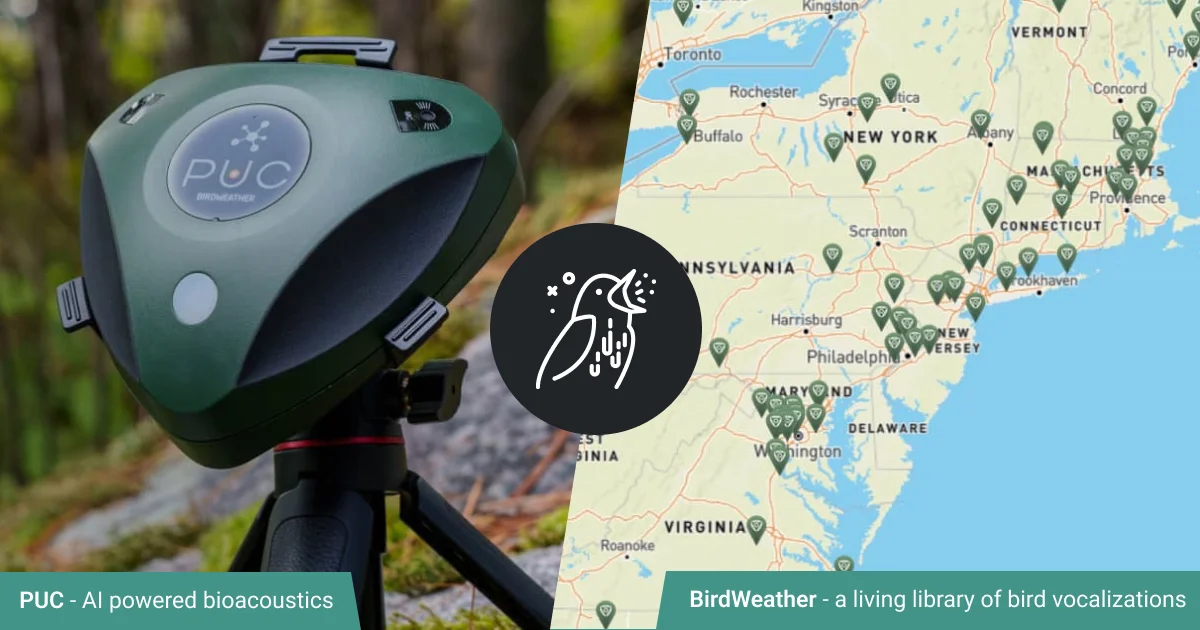
- BirdWeather Integration: Contributes detected species data to the BirdWeather global platform, supporting citizen-science mapping of bird activity worldwide.
- Apprise Notifications & Automatic Disk Management: Sends alerts via 90+ notification platforms when new species are detected, and automatically purges old audio files to keep the system running indefinitely.
Use Cases
- Backyard birders setting up a low-cost, always-on station to log every species visiting their garden throughout the year.
- Wildlife researchers and conservationists conducting long-term acoustic monitoring of bird populations in a specific habitat.
- Educators and students using BirdNET-Pi as a hands-on STEM project combining Raspberry Pi, machine learning, and ornithology.
- Citizen scientists contributing local bird detection data to the BirdWeather global map to support large-scale biodiversity studies.
- Nature reserves and parks deploying multiple inexpensive Raspberry Pi stations across a site to monitor species distribution and seasonal trends.
Pros
- Completely Free and Open Source: BirdNET-Pi is hosted on GitHub and installed with a single command — no subscription, licensing fees, or proprietary hardware required.
- Runs on Affordable Hardware: Designed specifically for the Raspberry Pi, enabling a powerful, always-on bird monitoring station at very low cost.
- Rich All-in-One Web Interface: Bundles a database admin panel, file manager, FTP server, terminal, and data visualisation tools, eliminating the need for separate software.
- Global Community & Citizen Science: BirdWeather integration connects individual stations to a worldwide network, amplifying the scientific value of local recordings.
Cons
- Requires Technical Setup: Installation and configuration assume familiarity with Raspberry Pi, Linux command-line, and networking — it is not a plug-and-play consumer product.
- Hardware Dependent: Officially targets Raspberry Pi running 64-bit Raspberry Pi OS Lite; running on other hardware or operating systems may require additional effort.
- Audio Format Restrictions: As of July 2025, BirdWeather only accepts FLAC audio, requiring users to ensure their configuration is updated to remain compatible.
Frequently Asked Questions
What hardware do I need to run BirdNET-Pi?
You need a Raspberry Pi running the latest 64-bit Raspberry Pi OS Lite image, a USB or HAT microphone for audio capture, and a stable internet connection for BirdWeather integration.
How do I install BirdNET-Pi?
Installation is a single curl command — paste `curl -s https://raw.githubusercontent.com/Nachtzuster/BirdNET-Pi/main/newinstaller.sh | bash` into your Raspberry Pi terminal and the script handles the rest.
Is BirdNET-Pi free to use?
Yes, BirdNET-Pi is completely free and open source, available on GitHub under an open license with no subscription or usage fees.
What is BirdWeather and do I have to use it?
BirdWeather is a global citizen-science platform that aggregates bird detection data from stations worldwide. Integration is optional but recommended — you can request a free BirdWeather ID from within the BirdNET-Pi settings to participate.
How does BirdNET-Pi manage storage on the SD card?
BirdNET-Pi includes automatic disk-space management that periodically purges old audio recordings, allowing the system to run indefinitely without manual intervention even on modest-capacity storage.