

About
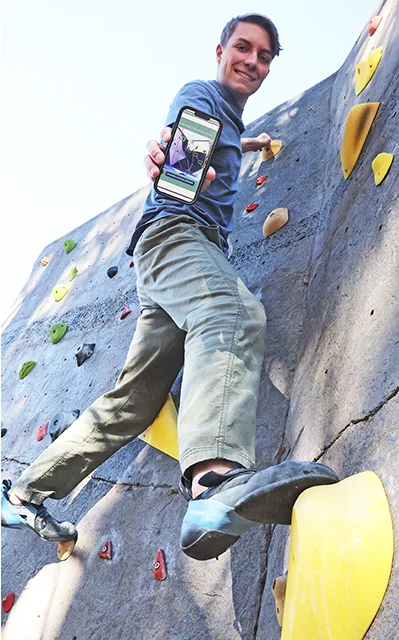
ClimbGrade is an AI-powered mobile application built to solve a longstanding problem in the rock climbing community: the absence of standardized difficulty ratings across indoor climbing gyms. Developed by 17-year-old self-taught programmer and competitive climber Levi Waters of Bend, Oregon, the app uses computer vision and a custom-built AI model to analyze photos of climbing routes and produce objective difficulty scores on the V-scale. The tool works by taking a picture of a climbing route and combining visual analysis — evaluating factors such as hold types, move count, wall angle, and body tension requirements — with personal body metrics including the climber's wingspan, height, and weight. The result is a personalized, standardized difficulty rating that reflects both the route's physical demands and the individual climber's attributes. This capability is especially valuable in regions like Bend, Oregon, where multiple climbing gyms within a short distance each maintain their own subjective rating systems. Without a common standard, climbers struggle to compare performance across venues or reliably gauge their improvement over time. ClimbGrade directly addresses this gap by automating and personalizing the rating process. Whether you're a beginner trying to safely choose appropriate routes, an intermediate climber tracking skill gains, or a coach designing evidence-based training programs, ClimbGrade brings data-driven objectivity to a sport that has historically relied on guesswork and community consensus. The app also improves safety by helping climbers avoid underestimating route difficulty.
Key Features
- AI Photo Analysis: Snap a photo of any climbing route and the app's custom AI model analyzes it to assess difficulty factors like hold types, move count, wall angle, and required body tension.
- Personalized Body Metric Inputs: Factors in the climber's wingspan, height, and weight to tailor difficulty ratings to the individual, making scores more relevant and accurate for each user.
- Standardized V-Scale Ratings: Outputs consistent V-scale scores so climbers can compare route difficulty across different gyms and facilities without relying on each venue's subjective in-house system.
- Progress Tracking: Provides a reliable baseline for tracking climbing improvement over time, regardless of which gym or facility the climber visits.
Use Cases
- Beginner climbers assessing route difficulty before attempting a climb to make safe, informed decisions.
- Intermediate and advanced climbers tracking skill progression consistently across multiple gyms using a standardized rating system.
- Climbing coaches building data-driven training programs based on objective, personalized route difficulty scores.
- Climbers traveling between cities or gyms who want to benchmark unfamiliar routes against their known ability level.
- Climbing gym staff or communities seeking a more objective way to communicate route difficulty to members of varying experience levels.
Pros
- Removes Subjectivity: Replaces inconsistent, gym-specific ratings with objective, AI-generated scores, making cross-gym comparisons meaningful for the first time.
- Personalized Difficulty Scores: Incorporates individual body metrics so ratings reflect a climber's unique physical profile, not just the route's generic characteristics.
- Improves Climber Safety: Helps beginners and experienced climbers avoid underestimating a route's difficulty, reducing the risk of dangerous situations on the wall.
Cons
- Early-Stage, Indie App: Built by a high school student as a passion project, the app may lack the polish, breadth of features, and broad distribution of established climbing or fitness tracking apps.
- Focused on Indoor Climbing: The app appears primarily designed for indoor gym routes; its accuracy and applicability for rating outdoor climbing routes has not been established.
Frequently Asked Questions
How does ClimbGrade determine a route's difficulty rating?
ClimbGrade takes a photo of the climbing route and uses a custom-built AI model to analyze visual features such as hold types, wall angle, and route layout. It then combines this analysis with the climber's personal body metrics — wingspan, height, and weight — to generate a V-scale difficulty rating.
What is the V-scale in rock climbing?
The V-scale is a widely used bouldering difficulty rating system. Lower numbers (e.g., V0, V1) represent easier climbs accessible to beginners, while higher numbers (up to V17) indicate elite-level difficulty requiring exceptional strength and technique.
Why are climbing difficulty ratings inconsistent between gyms?
Routes are typically rated by the route setters who create them and then adjusted through informal community consensus — an inherently subjective process. Different gyms develop their own styles and standards, producing significant variation in ratings even between venues located within miles of each other.
Who created ClimbGrade?
ClimbGrade was created by Levi Waters, a 17-year-old self-taught programmer and competitive rock climber from Bend, Oregon, while attending Caldera High School. He has been coding since sixth grade and combined his passions for climbing and software development to build the app.
Is ClimbGrade available to download?
ClimbGrade was developed as a personal project and featured in local news coverage in late 2025. Specific details about its public availability on app stores had not been widely published at the time of reporting.