

About
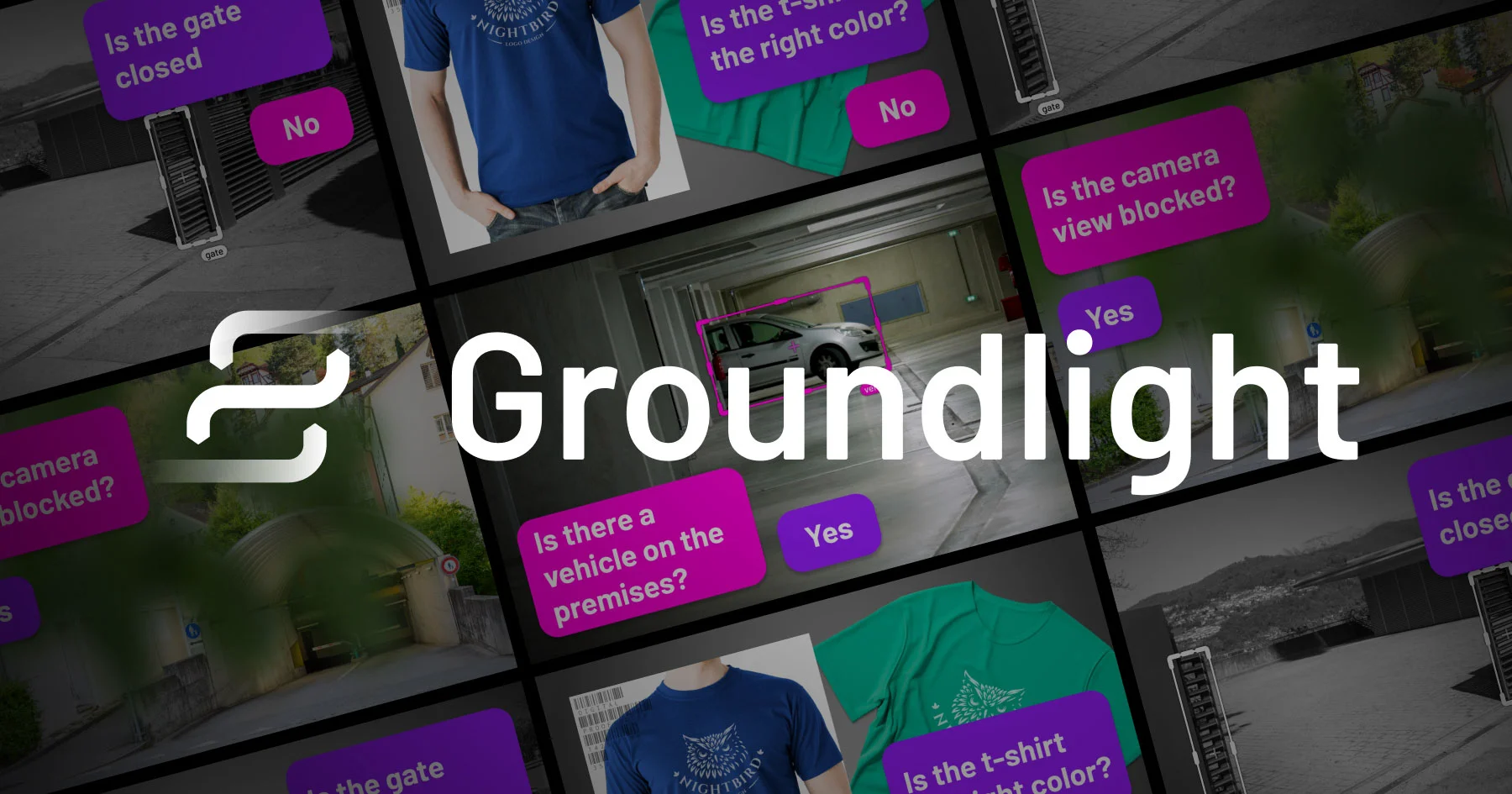
Groundlight AI Vision is a computer vision platform designed to make visual intelligence accessible to any developer or enterprise team. Instead of building complex ML pipelines or labeling large datasets, users simply ask natural-language questions about images — such as 'Is the path blocked?' or 'Are all workers wearing a safety harness?' — and receive reliable answers immediately. The platform's proprietary escalation architecture combines fast edge ML inference with expert human annotation to handle ambiguous edge cases in real time, ensuring consistent accuracy even in dynamic or changing environments. Models continuously self-improve as new data flows in, with Groundlight's team managing all MLOps invisibly in the background. Groundlight supports a wide range of industrial and enterprise use cases including manufacturing quality control, robotics navigation, retail monitoring, facilities management, and physical security. Integration is streamlined through a Python SDK, a ROS2 package for robotics deployments, and the plug-and-play Groundlight Hub appliance. All data is encrypted and handled with enterprise-standard security and privacy practices. The platform is especially valuable for engineering teams that need to automate visual inspection or monitoring workflows without hiring specialized computer vision talent. With minimal code and zero pre-existing training data required, Groundlight dramatically shortens deployment timelines from months to hours.
Key Features
- Natural Language Queries: Ask questions about images in plain English — no labeling, no complex programming. Simply write the question that maps to your business value and get structured answers.
- Day-One Results Without Training Data: Unlike traditional CV solutions that require weeks of data collection and labeling, Groundlight delivers accurate answers immediately using its proprietary ML models and escalation architecture.
- Real-Time Escalation Architecture: Edge cases are automatically escalated to expert human annotators in real time, ensuring robust and reliable results even in dynamic or unpredictable environments.
- Invisible MLOps: Groundlight's ML team continuously audits model performance, retrains models with fresh data, and applies the latest techniques — all transparently, with zero overhead for your team.
- Python SDK & ROS2 Integration: Integrate vision intelligence into any application or robotic system with a clean Python SDK and an easy-to-use ROS2 package, enabling rapid deployment across diverse platforms.
Use Cases
- Automating visual quality control and product inspection on manufacturing lines without building custom ML pipelines.
- Enabling robots to navigate and operate in unstructured environments using real-time natural language vision queries.
- Monitoring retail shelves and store environments for inventory gaps, compliance, or unauthorized activity.
- Verifying worker safety compliance (e.g., PPE usage) on job sites and in industrial facilities using existing cameras.
- Auditing the health and functionality of security camera installations at scale, replacing costly manual checks.
Pros
- No ML Expertise Required: Any developer can build computer vision functionality using natural language and a few lines of code, eliminating the need for specialized ML or CV skills.
- Immediate Deployment: Models work from day one without pre-existing datasets, cutting deployment timelines from months to hours and enabling fast iteration.
- Enterprise-Grade Security: All captured, stored, and processed data is encrypted using industry-standard security practices, making it suitable for regulated and sensitive enterprise environments.
- Adaptable Models: Models learn on the fly and adapt to environmental changes (e.g., new equipment colors, new configurations) without manual retraining.
Cons
- Enterprise-Focused Pricing: Groundlight is primarily positioned for enterprise use cases, and full-featured access likely requires a sales conversation, which may be a barrier for smaller teams or individual developers.
- Query Format Constraints: The platform is optimized for binary (yes/no) visual question answering, which may not cover all complex computer vision tasks such as object counting, segmentation, or bounding box detection.
- Cloud Dependency for Escalation: The human escalation and continuous model improvement features rely on cloud connectivity, which could be a limitation for fully air-gapped or offline deployments.
Frequently Asked Questions
Do I need an existing dataset or labeled images to get started?
No. Groundlight is designed to deliver results from day one without any pre-existing dataset. Its combination of proprietary ML models and human escalation handles new queries immediately, and models improve automatically over time.
What kind of questions can I ask Groundlight?
Groundlight is optimized for binary yes/no questions about images, such as 'Is the conveyor belt blocked?', 'Are all safety caps in place?', or 'Is a worker present in the restricted zone?' These map directly to business outcomes without complex configuration.
How does the escalation architecture work?
When Groundlight's edge ML model is uncertain about an answer, it automatically escalates the image to expert human annotators who provide a verified response. This feedback is used to retrain the model, improving future accuracy continuously.
Can Groundlight be used with robotics systems?
Yes. Groundlight provides a Python SDK and a ROS2 package that allows reliable computer vision to be integrated into robotic workflows. It can be deployed across a wide variety of robotic platforms and environments.
What industries does Groundlight support?
Groundlight serves manufacturing, robotics, retail, facilities management, and security industries. Common applications include quality control inspection, safety compliance monitoring, inventory checks, and camera health verification.