
About
Health Recovery Solutions (HRS) is the leading Remote Patient Monitoring (RPM) and virtual care platform, recognized as 4X 'Best in KLAS' in its category. Designed for a wide range of healthcare organizations—including hospitals, health systems, home health agencies, community health centers, hospice and palliative care providers, physician practices, and payers—HRS enables clinicians to deliver high-quality care directly to patients at home. HRS offers four distinct care models: HomeHealth Advantage for independent agencies, PatientFirst Primary for ambulatory and community clinics, PatientFirst Pathways for hospitals and health systems, and PatientFirst Pinnacle for full-service provider and payer organizations. Its clinical solutions cover key patient populations including cardiac, COPD, hypertension, diabetes, and respiratory virus patients. Key platform capabilities include industry-leading RPM devices and software, out-of-the-box EHR integration with every major platform, expert telehealth reimbursement support, complete logistics and inventory management, and powerful analytics and reporting tools. HRS also supports Hospital at Home programs, enabling health systems to extend acute-level care outside traditional settings. By combining clinical expertise, technology, and operational support, HRS helps healthcare organizations reduce hospital readmissions, improve patient adherence and satisfaction, expand access to underserved populations, and generate sustainable revenue through telehealth reimbursement. It is purpose-built for clinicians and healthcare administrators seeking scalable, outcomes-driven virtual care programs.
Key Features
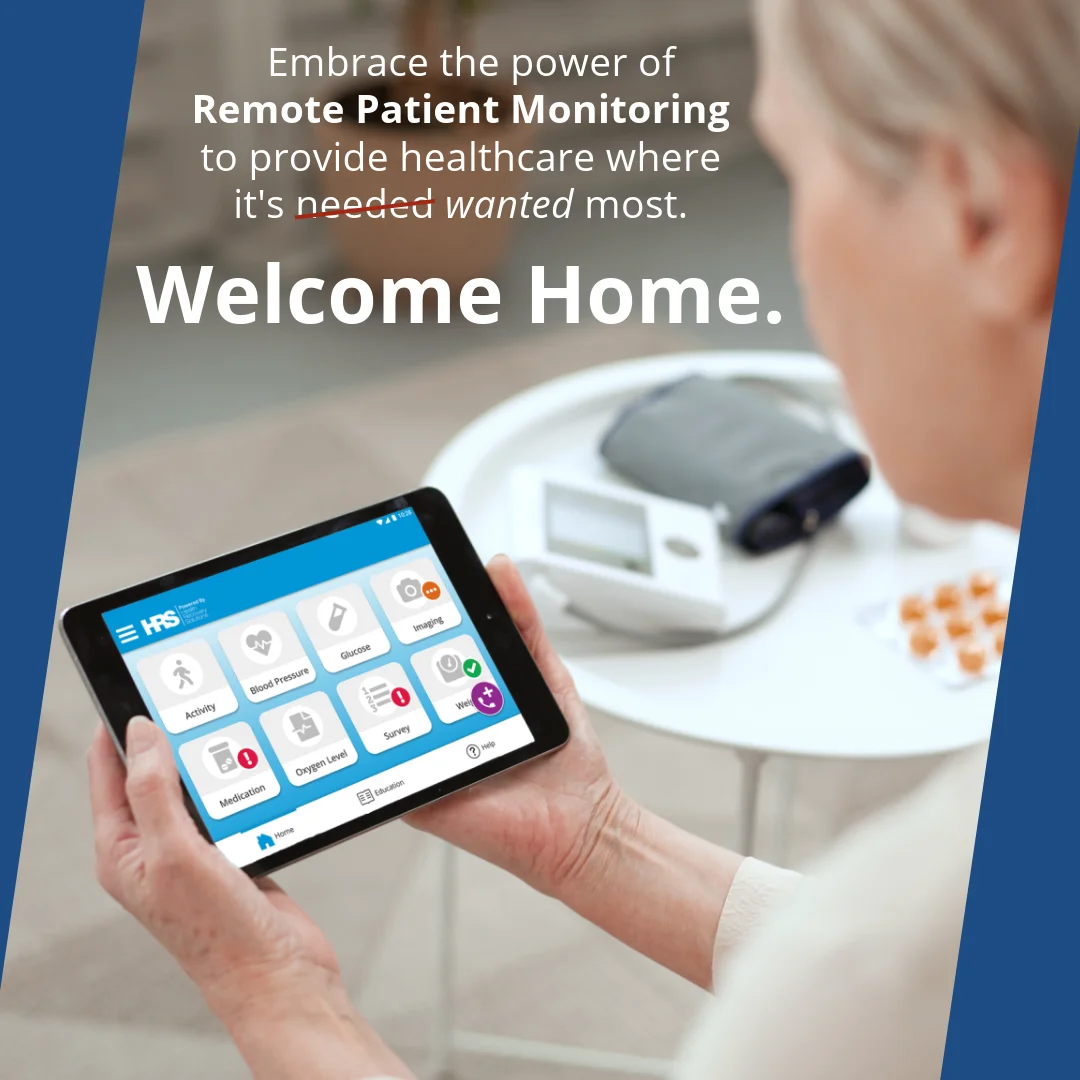
- Remote Patient Monitoring (RPM): Industry-leading, 4X Best in KLAS RPM solution that monitors patients in real time from home, reducing hospital readmissions and improving care quality.
- EHR Integration: Out-of-the-box, hassle-free integration with every major EHR platform, enabling seamless clinical workflows without custom development.
- Multiple Care Models: Four tailored care models—HomeHealth Advantage, PatientFirst Primary, PatientFirst Pathways, and PatientFirst Pinnacle—designed for different provider and payer settings.
- Analytics & Reporting: Powerful reporting and analytics tools that unlock the growth potential and value of virtual care programs, supporting data-driven clinical and operational decisions.
- Logistics & Inventory Management: Complete end-to-end logistics and device inventory management owned and operated by HRS, simplifying deployment and supply chain for healthcare organizations.
Use Cases
- Hospitals and health systems using RPM to reduce 30-day readmissions for high-risk cardiac and COPD patients discharged to home.
- Home health agencies deploying remote monitoring devices to improve patient adherence to care plans and increase satisfaction scores.
- Community health centers expanding access to chronic disease management for underserved populations through virtual care.
- Physician practices generating new, sustainable revenue streams by enrolling patients in RPM and CCM reimbursement programs.
- Payers and payviders implementing scalable in-home member monitoring to reduce avoidable hospitalizations and control costs.
Pros
- Industry Recognition: Awarded 4X 'Best in KLAS' for remote patient monitoring, reflecting consistent excellence in product quality and customer outcomes.
- Broad Care Setting Support: Covers 16 care settings including hospitals, home health, hospice, community health centers, and physician practices, making it highly versatile.
- Seamless EHR Integration: Native integrations with all major EHR platforms reduce implementation friction and support efficient clinical workflows.
- Comprehensive Reimbursement Support: Expert guidance on telehealth and RPM reimbursement helps organizations maximize revenue and navigate complex billing requirements.
Cons
- Enterprise-Focused Pricing: Designed primarily for larger healthcare organizations; pricing and implementation complexity may be prohibitive for small independent practices.
- No Transparent Pricing: Pricing is not publicly listed, requiring organizations to contact sales for custom quotes, which can slow the evaluation process.
- Implementation Lead Time: Full deployment, including device logistics, EHR integration, and staff training, may require significant time and organizational resources.
Frequently Asked Questions
What is Remote Patient Monitoring (RPM)?
RPM is a telehealth model that uses digital devices and software to collect and transmit patient health data—such as vital signs—from a patient's home to their care team, enabling continuous monitoring and timely interventions without requiring in-person visits.
What care settings does HRS support?
HRS supports 16 care settings including hospitals and health systems, home health agencies, community health centers, hospice and palliative care providers, physician practices, and payers/payviders.
How does HRS integrate with existing EHR systems?
HRS offers out-of-the-box EHR integration that works with every major EHR platform, minimizing custom development needs and allowing clinical data to flow seamlessly into existing workflows.
Which patient populations does HRS specialize in?
HRS supports cardiac patients, COPD, hypertension, diabetes, and respiratory virus patients, with clinical protocols and monitoring tools tailored to each condition's specific needs.
Does HRS provide reimbursement support for telehealth programs?
Yes. HRS offers expert reimbursement support and resources to help healthcare organizations navigate telehealth and RPM billing codes, maximize reimbursement, and identify grant funding opportunities.