

About
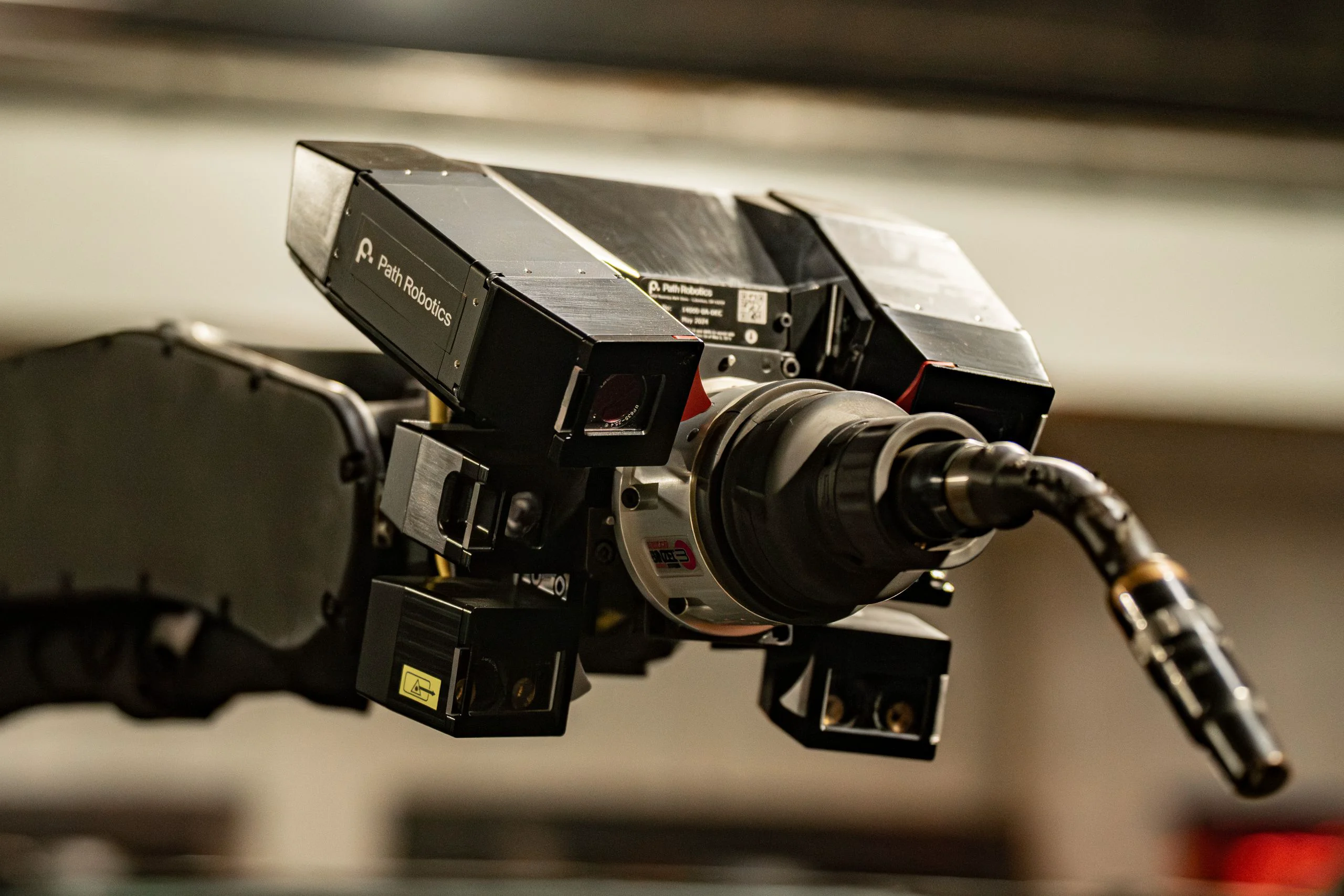
Path Robotics addresses one of American manufacturing's most pressing crises: a projected shortage of hundreds of thousands of skilled welders by 2030, with 43% of the current workforce retiring within a decade. Their solution is the Obsidian™ Intelligent Welding Cell — a fully autonomous robotic welding system powered by Obsidian, the world's first purpose-built foundational AI model for welding. Obsidian is trained on tens of millions of welded inches and enables true real-time adaptation, allowing cells to produce perfect welds even from imperfect or variable parts. The system sees, understands, and adapts autonomously — and becomes continuously smarter with every weld it completes. Key performance metrics include 4x productivity over manual welding, 30%+ cost reduction, 97%+ first-pass yield, and 10 million+ inches welded. Path Robotics operates on a $0 capex model, offering 24/7 mission control support, making enterprise-grade automation accessible without large upfront hardware investments. The platform serves four major verticals: Defense (ship hulls, armored panels, vehicle frames, weapon mounts), Utility & Energy (utility poles, substations, battery storage), Data Centers (structural frames, e-houses, cooling units, server racks), and Heavy Industry (large-scale structural fabrication). Customers include HII (US Navy shipbuilding), Saronic, LAD Services, Tycrop, Mine Rite Technologies, and Millerbernd.
Key Features
- Obsidian™ Foundational AI Model: The world's first purpose-built foundational AI model for welding, trained on tens of millions of welded inches to enable true autonomous operation and continuous learning.
- Real-Time Adaptive Welding: Obsidian sees, understands, and adapts in real time, producing consistent, high-quality welds even across part-to-part variations and imperfect workpieces.
- 97%+ First-Pass Yield: Industry-leading weld quality with over 97% first-pass yield, reducing rework and scrap while maintaining exceptional consistency at scale.
- $0 Capex Service Model: Path Robotics offers autonomous welding capacity with no upfront capital expenditure, backed by 24/7 mission control support to keep cells running around the clock.
- Continuous Self-Improvement: Every weld the system completes feeds back into the Obsidian model, making cells progressively smarter and more capable over time.
Use Cases
- Automating high-volume structural welding in defense shipyards to restore US Navy vessel production capacity without relying on scarce skilled welders.
- Fabricating utility infrastructure components such as poles, substations, and battery storage enclosures to accelerate energy grid expansion.
- Welding structural frames, e-houses, and cooling units for data center construction at the speed and scale required by AI infrastructure buildouts.
- Handling large, variable heavy-industry parts — such as mining equipment frames or agricultural machinery — that exceed the capability of traditional robotic systems.
- Augmenting existing manufacturing workforces to increase throughput and consistency without hiring additional welders in a shrinking labor market.
Pros
- Solves Critical Labor Shortages: Directly addresses the projected shortage of skilled welders by 2030, enabling manufacturers to scale output without depending on a shrinking labor pool.
- No Capital Expenditure Required: The $0 capex model removes the traditional financial barrier to industrial automation, making high-performance robotic welding accessible to a wider range of manufacturers.
- Handles Complex, Large-Scale Parts: Unlike traditional robotic welders, Path's cells can handle massive, variable structures — including 50,000-pound, 44-foot-long components — that were previously impossible to automate.
- Proven in Mission-Critical Industries: Already deployed across defense shipbuilding, heavy industry, and energy infrastructure with validated customer outcomes and strong testimonials.
Cons
- Highly Specialized Use Case: Path Robotics is purpose-built exclusively for welding applications, limiting its applicability to manufacturers outside of metal fabrication workflows.
- Enterprise-Focused with Limited Transparency on Pricing: As a B2B service targeting large industrial customers, pricing and deployment details are not publicly disclosed, requiring direct engagement with the sales team.
- Physical Infrastructure Dependency: Deployment requires physical installation and integration of welding cells on-site, which may involve lead times and operational changes for facilities.
Frequently Asked Questions
What is Obsidian™ and how does it work?
Obsidian™ is Path Robotics' proprietary foundational AI model built specifically for welding. It was trained on tens of millions of welded inches and uses computer vision and real-time sensing to see, understand, and adapt to each part — producing high-quality welds autonomously, even when parts vary in shape or position.
What does '$0 capex' mean for customers?
Path Robotics offers its intelligent welding cells as a service rather than a capital equipment purchase, meaning manufacturers do not need to make large upfront hardware investments. Instead, customers pay for the welding capacity and output delivered, supported by 24/7 mission control.
What industries does Path Robotics serve?
Path Robotics serves four primary verticals: Defense (shipyards, armored vehicle fabrication), Utility & Energy (utility poles, substations, battery storage), Data Centers (structural and mechanical assemblies), and Heavy Industry (large-scale metal fabrication).
How does Path Robotics compare to traditional robotic welders?
Traditional robotic welders require near-perfect, highly consistent parts and extensive programming. Path's Obsidian AI adapts in real time to part variations, enabling automation of complex, variable, and large-scale workpieces that conventional systems cannot handle.
Does the system improve over time?
Yes. Obsidian continuously learns from every weld it performs. This means the system becomes progressively more capable and efficient the longer it operates, creating compounding value for customers over time.