

About
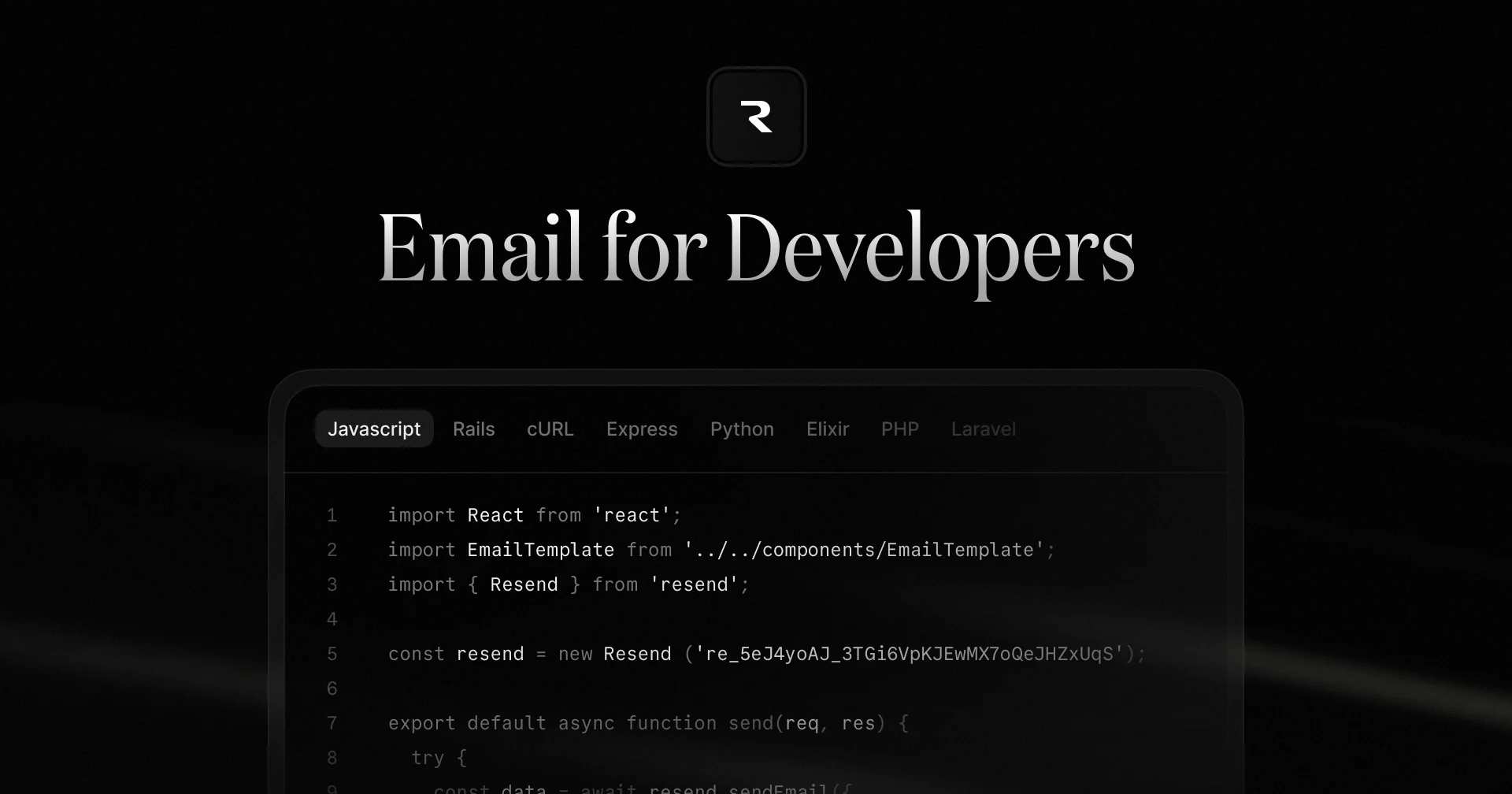
Resend is a modern email infrastructure platform designed specifically for developers who need reliable, scalable email delivery. Whether you're sending transactional emails like password resets and onboarding flows or large-scale marketing broadcasts, Resend provides everything needed to reach inboxes instead of spam folders. The platform offers official SDKs for Node.js, Python, Ruby, PHP, Go, Rust, Java, Elixir, .NET, and supports REST and SMTP — making integration seamless regardless of your stack. Developers can build beautiful HTML email templates using React via the open-source react-email library, eliminating the pain of writing table-based HTML layouts by hand. Resend includes a built-in test mode to safely simulate email events without sending real messages. Modular webhooks deliver real-time server notifications for events like delivery, opens, bounces, clicks, and complaints. A modern visual editor lets non-technical teammates write and format emails without touching code. Contact management tools allow importing and organizing subscriber lists at any scale, with visibility into individual contact attributes. Broadcast analytics provide actionable insights into how audiences interact with email campaigns. The platform is trusted by companies of all sizes and is built by a team of engineers dedicated to creating the email infrastructure they always wished existed.
Key Features
- Multi-Language SDK Support: Official SDKs for Node.js, Python, Ruby, PHP, Go, Rust, Java, Elixir, .NET, plus REST and SMTP support, so you can integrate email sending into any tech stack in minutes.
- React Email Templates: Build beautiful, responsive email templates using React components via the open-source react-email library — no more wrestling with table-based HTML layouts.
- Modular Webhooks: Receive real-time server notifications for every email event — deliveries, opens, clicks, bounces, and complaints — enabling reactive workflows in your application.
- Contact Management & Broadcast Analytics: Import and manage subscriber lists at any scale, with detailed per-contact visibility and powerful broadcast analytics to understand audience engagement.
- Test Mode: Safely simulate email events and experiment with the API without the risk of accidentally sending real emails to real people during development.
Use Cases
- Sending transactional emails such as password resets, email verifications, and order confirmations from web or mobile applications.
- Delivering onboarding email sequences to new users automatically triggered by sign-up events in a SaaS product.
- Running marketing broadcast campaigns to segmented subscriber lists with detailed open, click, and engagement analytics.
- Building and previewing responsive HTML email templates using React components within a developer workflow.
- Monitoring email delivery health in real time through webhooks to detect bounces, complaints, and delivery failures and act on them programmatically.
Pros
- Developer-First Experience: Clean API design, comprehensive multi-language SDKs, and React-based templating make integration fast and intuitive for engineering teams.
- High Deliverability: Purpose-built infrastructure focused on inbox placement over spam folders, giving critical transactional emails the best chance of reaching recipients.
- All-in-One Platform: Covers transactional email, marketing broadcasts, contact management, analytics, and webhooks in a single product — reducing the need for multiple tools.
- Generous Free Tier: A freemium model allows smaller teams and startups to get started without upfront cost and scale up as their sending volume grows.
Cons
- Primarily Developer-Oriented: While a visual editor exists, the platform's full power is geared toward developers, which may require engineering involvement for initial setup and integrations.
- Newer Platform: As a newer entrant compared to legacy providers like SendGrid or Mailgun, the ecosystem of third-party integrations and community resources is still maturing.
- Volume-Based Pricing at Scale: Costs can increase meaningfully for high-volume senders, and enterprises should carefully evaluate pricing tiers as their email volume grows.
Frequently Asked Questions
What types of emails can I send with Resend?
Resend supports both transactional emails (e.g., password resets, onboarding confirmations, receipts) and marketing/broadcast emails (e.g., newsletters, promotional campaigns) from a single platform.
Which programming languages does Resend support?
Resend provides official SDKs for Node.js, Python, Ruby, PHP, Go, Rust, Java, Elixir, and .NET. It also supports REST API and SMTP for any language or framework not covered by an official SDK.
How do I build email templates with Resend?
Resend integrates with react-email, an open-source component library that lets developers build email templates using React. It also includes a visual editor for non-developers to write and format emails without code.
Does Resend offer a free plan?
Yes, Resend operates on a freemium model with a free tier suitable for small projects and development work. Paid plans unlock higher sending volumes, advanced analytics, and additional features.
How do webhooks work in Resend?
Resend's modular webhooks send real-time HTTP POST notifications to your server whenever an email event occurs — such as delivery, open, click, bounce, or spam complaint — allowing you to build reactive workflows and maintain accurate email status in your application.