

About
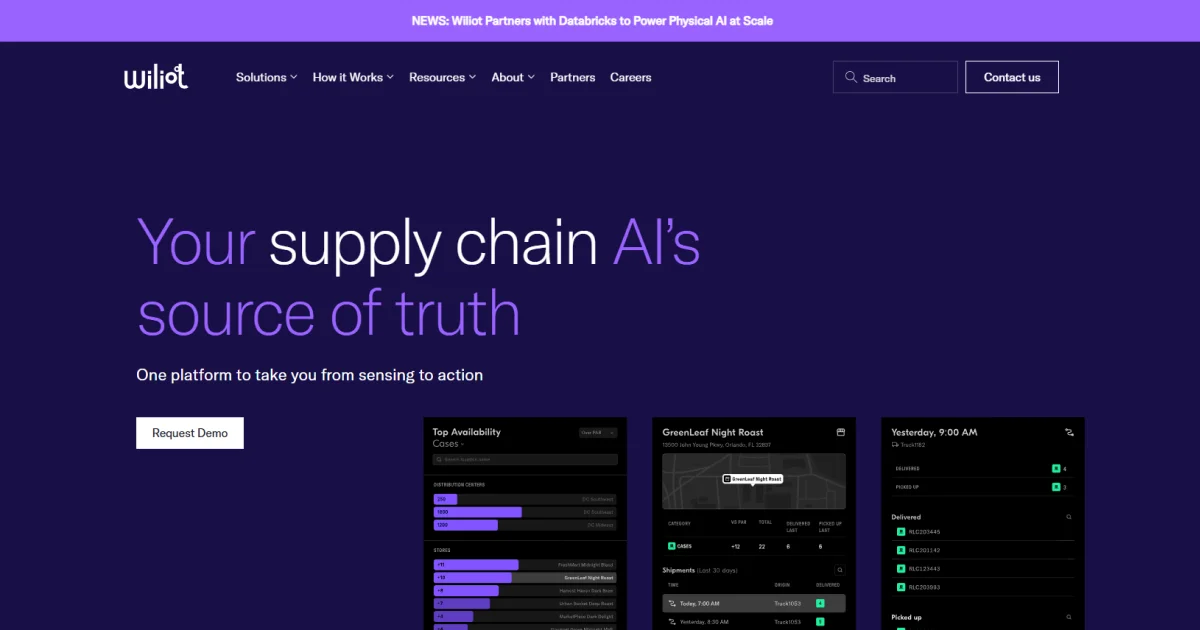
Wiliot transforms supply chain operations by connecting physical items to the cloud through a three-layer architecture: IoT Pixels, Network Infrastructure, and the Wiliot Cloud. IoT Pixels are ultra-low-cost, battery-free Bluetooth sensors that harvest energy from ambient radio signals and attach to virtually any item — transmitting location, temperature, and movement data continuously without manual intervention. The Network Infrastructure layer consists of off-the-shelf hubs and gateways that wake up nearby IoT Pixels, collect their data, and securely forward it to the Wiliot Cloud. In the cloud, specialized AI models and agents transform raw sensing data into actionable insights, alerts, dashboards, and automated workflows. Wiliot eliminates traditional RFID choke points and scan-dependent processes, replacing them with continuous, scan-free visibility across facilities and vehicles. Key enterprise solutions include Automated Cycle Count, Automated Receiving, Reusable Asset Tracking, Automated Shipment Verification, and Temperature Monitoring for cold chain compliance. The platform also supports Digital Product Passports for sustainability and regulatory traceability. Wiliot serves major sectors including grocery, general retail, quick service restaurants, and post & parcel logistics, helping enterprises reduce waste, minimize errors, and drive measurable ROI at scale.
Key Features
- Battery-Free IoT Pixels: Ultra-low-cost Bluetooth sensors that harvest energy from ambient radio signals and attach to any item to continuously report location, temperature, and movement — no batteries or manual scanning required.
- Ambient IoT Network Infrastructure: Off-the-shelf hubs and gateways that wirelessly wake up IoT Pixels, collect their data, and securely relay it to the Wiliot Cloud with minimal deployment effort.
- AI-Driven Cloud Platform: The Wiliot Cloud hosts specialized AI models and agents that convert raw sensor data into smart alerts, analytics dashboards, and automated actions for supply chain decision-making.
- Scan-Free Supply Chain Automation: Automates key workflows including cycle counting, receiving, shipment verification, and reusable asset tracking without fixed RFID read points or manual labor.
- Cold Chain & Temperature Monitoring: Continuously monitors temperature-sensitive goods throughout the supply chain to ensure compliance, reduce spoilage, and maintain product quality.
Use Cases
- Retail chains automating inventory cycle counts across store floors and backrooms without manual scanning or RFID gates.
- Grocery and food logistics operators monitoring cold chain temperature compliance in real time from warehouse to store shelf.
- Logistics companies tracking reusable transport assets (pallets, crates, containers) to reduce loss and improve utilization.
- Post and parcel providers gaining real-time shipment verification and automated receiving accuracy at distribution centers.
- Quick service restaurant operators tracking ingredient inventory and equipment to reduce waste and ensure operational readiness.
Pros
- Continuous, Scan-Free Visibility: Eliminates manual scanning and fixed RFID choke points, providing always-on, real-time awareness of every tagged asset across facilities and vehicles.
- Low-Cost, Scalable Hardware: Battery-free IoT Pixels are inexpensive to produce and deploy at scale, dramatically lowering the cost barrier for enterprise-wide item-level tracking.
- End-to-End Platform: Covers the full stack from physical sensing to cloud AI insights, reducing integration complexity and vendor fragmentation for enterprise operations teams.
- Multi-Industry Applicability: Proven across grocery, retail, logistics, QSR, and post & parcel use cases with purpose-built solutions for each vertical.
Cons
- Enterprise-Only Pricing: Wiliot targets large enterprises and requires a demo/sales engagement — there is no self-serve free tier, making it inaccessible for small businesses or pilots without vendor involvement.
- Hardware Dependency: Deploying Wiliot requires physical installation of IoT Pixels and network hubs across facilities, which involves upfront logistics, change management, and infrastructure coordination.
- Niche Use Case: The platform is purpose-built for supply chain and physical asset tracking, limiting its relevance outside of logistics, retail, and industrial operations contexts.
Frequently Asked Questions
What are Wiliot IoT Pixels?
IoT Pixels are tiny, battery-free Bluetooth sensors that can be attached to virtually any physical item. They harvest energy from ambient radio signals (like Wi-Fi and Bluetooth) to transmit data such as location, temperature, and movement — eliminating the need for batteries or manual scanning.
How does Wiliot differ from traditional RFID tracking?
Traditional RFID requires items to pass through fixed read points, creating bottlenecks and gaps in visibility. Wiliot provides continuous, scan-free tracking by having IoT Pixels broadcast data at all times as long as they are within range of the network infrastructure, delivering real-time awareness rather than point-in-time snapshots.
What industries does Wiliot serve?
Wiliot is designed for enterprises in grocery, general retail, quick service restaurants (QSR), post & parcel logistics, and broader supply chain operations. Its solutions address common pain points like inventory inaccuracy, cold chain compliance, and reusable asset loss.
What supply chain workflows can Wiliot automate?
Wiliot automates Automated Cycle Count, Automated Receiving, Reusable Asset Tracking, Automated Shipment Verification, and Temperature Monitoring — reducing labor costs and errors associated with manual processes.
How do I get started with Wiliot?
Wiliot is an enterprise platform sold through a sales-assisted process. You can request a demo via the Wiliot website to discuss your specific supply chain needs, infrastructure requirements, and deployment scope with their team.