

About
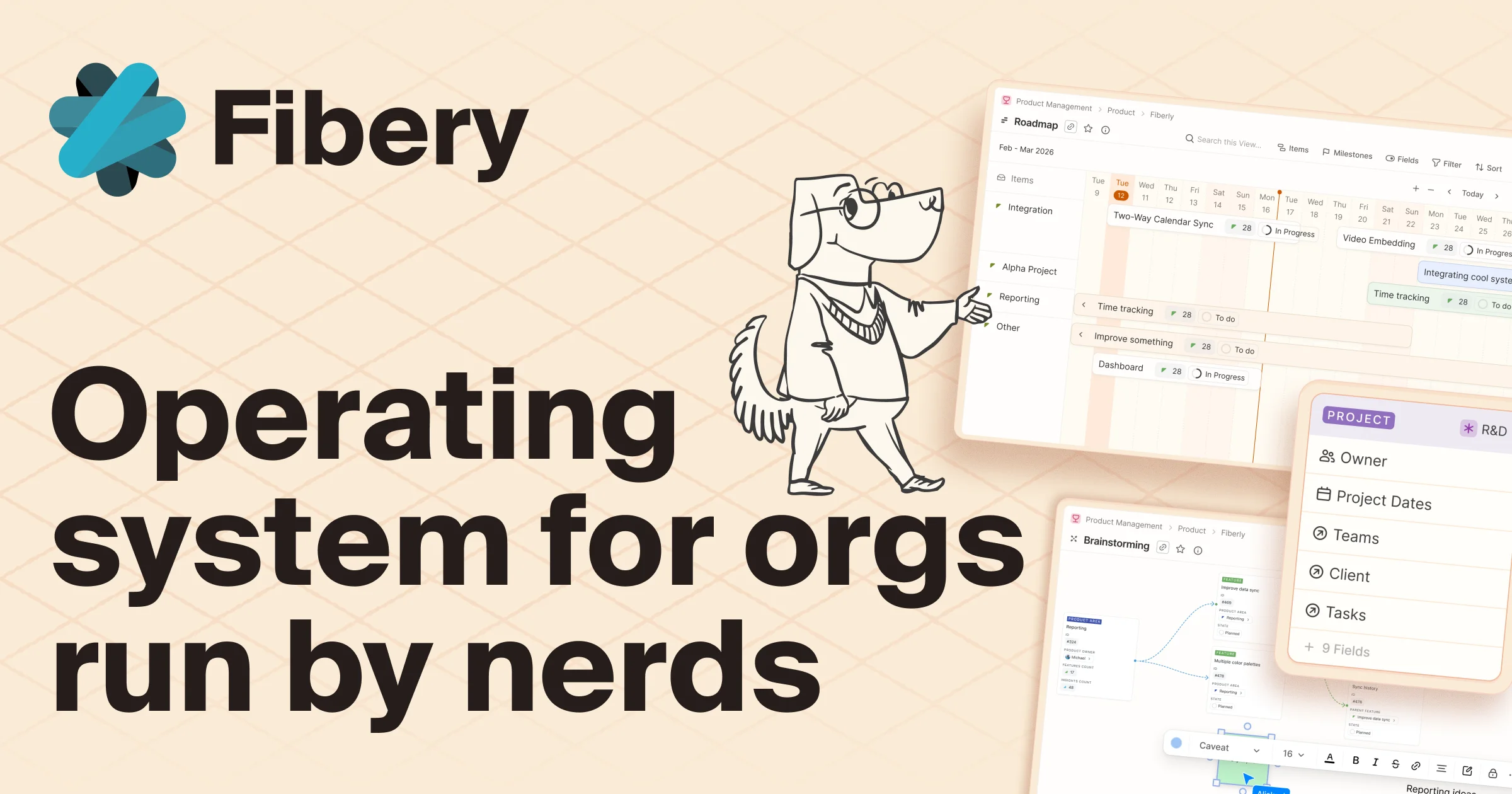
Fibery is an all-in-one work platform built for organizations that want to replace a fragmented stack of disconnected tools with a single, deeply interconnected workspace. At its core, Fibery is a modular, no-code system: teams can design their workspace from scratch using relational databases, custom views (boards, timelines, Gantt charts, calendars, maps, and more), and flexible templates that cover use cases from OKR tracking and product discovery to sales CRM, sprint management, and hiring. Fibery's built-in AI layer — Fibery AI — enables teams to brainstorm within documents, automate repetitive tasks, find relevant data across the workspace, and experiment with workflows using natural language. Rather than simply bolting AI onto a static tool, Fibery treats AI as a first-class citizen that adapts to your custom data structure and processes. The platform is particularly well-suited to product teams, digital agencies, software development teams, and startups that need to capture customer insights, manage projects, track goals, and collaborate on documents — all without context-switching between apps. Fibery's relational database foundation means that any entity (a task, a customer, a feature request) can be linked to any other, creating a living network of work context. It also offers a browser extension, public API, and integrations with popular tools. A free plan is available, with paid tiers for growing teams and enterprises requiring advanced permissions and security.
Key Features
- Modular No-Code Workspace: Build your perfect workspace from scratch using relational databases, custom fields, and fully configurable spaces — no engineering required.
- Multiple Powerful Views: Visualize work in Table, Board, Timeline, Gantt, Calendar, Gallery, Map, Form, Dashboard, and more — with deep hierarchy and inline editing throughout.
- Fibery AI Assistant: Brainstorm ideas, automate repetitive tasks, surface relevant data, and experiment with processes using a built-in AI layer that understands your custom data model.
- Relational Data Model: Link any entity — tasks, customers, features, documents — to any other, creating a deeply intertwingled network of context that eliminates information silos.
- Rich Template Library: Get started instantly with templates for OKR tracking, product discovery, sprint management, sales CRM, hiring, and dozens more — all fully customizable.
Use Cases
- Product teams use Fibery to connect customer research, feature requests, roadmap items, and sprint tasks in a single relational workspace, eliminating tool-hopping between Jira, Notion, and spreadsheets.
- Digital agencies manage client projects, track deliverables, and maintain a built-in CRM for client relationships — all within one interconnected Fibery workspace.
- Software development teams run Agile sprints, maintain technical wikis, and track bugs while keeping everything linked to the broader product roadmap.
- Startups use Fibery to track OKRs, manage hiring pipelines, run retrospectives, and document processes as the company scales, without outgrowing or switching tools.
- Operations leaders use Fibery AI to automate status updates, surface cross-team insights, and identify workflow bottlenecks across the entire organization.
Pros
- Replaces Multiple Tools: Fibery consolidates project management, knowledge management, CRM, documents, and whiteboards into one platform, reducing SaaS sprawl and context-switching.
- Extremely Flexible & Customizable: The modular, no-code architecture means Fibery adapts to nearly any team structure or workflow rather than forcing teams into a rigid opinionated system.
- AI Built Into the Data Model: Unlike tools that add AI as a surface-level chatbot, Fibery AI understands your custom entities and relationships, making automation and insights genuinely contextual.
- Strong Relational Foundation: The relational database core lets teams surface cross-functional insights (e.g., linking customer feedback to product features to sprint tasks) that siloed tools cannot provide.
Cons
- Steep Learning Curve: Fibery's power comes at the cost of initial complexity — new users often need significant onboarding time to configure spaces and understand the relational data model.
- Can Feel Overwhelming: The sheer number of views, templates, and configuration options can be paralyzing for small teams or individuals who just need a simple task manager.
- Niche Appeal: Fibery self-identifies as built for 'nerds,' and its opinionated flexibility is best appreciated by technical teams — less technical users may prefer simpler alternatives.
Frequently Asked Questions
What kind of teams is Fibery best suited for?
Fibery is ideal for product teams, software development teams, digital agencies, and startups that need to manage complex, interconnected workflows across projects, customers, and knowledge — all in one place.
Does Fibery require coding or technical skills?
No. Fibery is a no-code platform. You can design databases, build views, create automations, and configure AI features entirely through its visual interface without writing any code.
How does Fibery AI work?
Fibery AI is embedded throughout the workspace and can brainstorm ideas within documents, automate repetitive tasks, find relevant data across spaces, and suggest process improvements — all informed by your actual data model and content.
Can Fibery replace tools like Jira, Notion, and HubSpot?
For many teams, yes. Fibery is designed as a modular replacement for a stack of specialized tools, covering project management, knowledge management, CRM, and documents in a single interconnected workspace.
Is there a free plan available?
Yes. Fibery offers a free sign-up tier for individuals and small teams to explore the platform. Paid plans unlock advanced features like expanded storage, automations, permissions, and enterprise-grade security.