

About
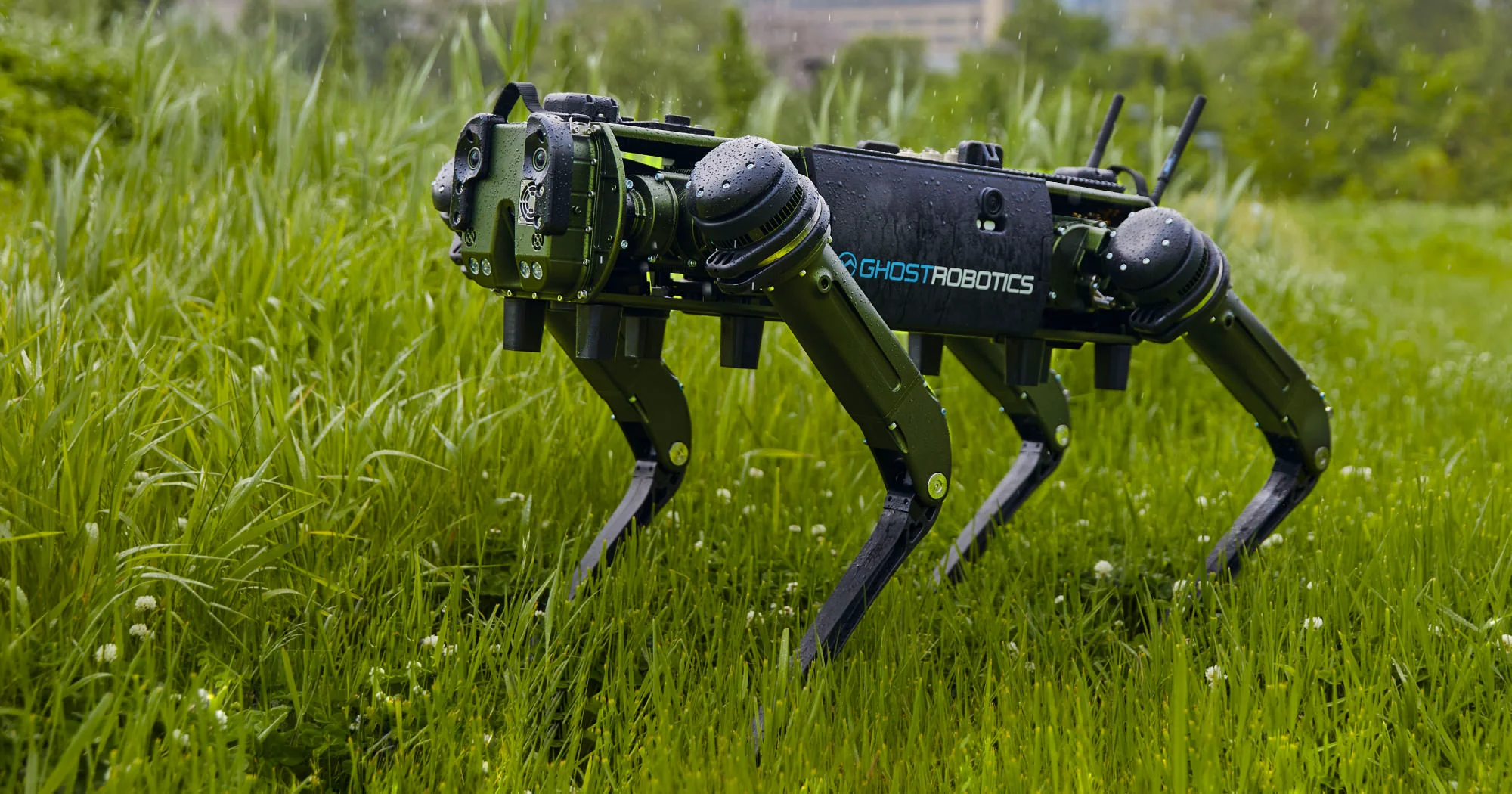
Ghost Robotics is a robotics company specializing in quadrupedal unmanned ground vehicles (Q-UGVs) for defense, government, and commercial applications. Their flagship product, the Vision 60, is a highly adaptable legged robot engineered to conquer virtually any terrain—from military bases and disaster zones to construction sites and oil fields. The Vision 60 features unstoppable agility through its four-legged design, enabling it to traverse rough terrain, recover from falls, and even operate inverted. Its modular architecture allows field-replaceable legs and swappable payloads, maximizing operational uptime. Out-of-the-box Wi-Fi and LTE connectivity, plus integration with advanced radio systems (Silvus, Persistent Systems, Rajant), ensures seamless communication in remote or contested environments. Ghost Robotics robots are deployed across a wide range of missions: perimeter security at U.S. Air Force bases, disaster response alongside Japan's Ground Self-Defense Force, construction site safety monitoring, and law enforcement support. Their AI-powered autonomous navigation enables robots to traverse unknown urban and rural environments without constant human control. The platform is purpose-built for enterprise and government customers requiring high reliability, ruggedization, and mission adaptability. Ghost Robotics serves defense agencies, public safety organizations, industrial operators, and educational institutions seeking to reduce human risk and increase operational efficiency through intelligent autonomous robotics.
Key Features
- Vision 60 Q-UGV Platform: A quadrupedal unmanned ground vehicle with unmatched agility, capable of traversing rough terrain, recovering from falls, and operating inverted.
- Modular Payload System: Field-replaceable modular legs and swappable payload bays allow rapid reconfiguration for diverse mission types without specialized tools.
- Autonomous Navigation: AI-driven navigation enables the robot to autonomously traverse unknown or obscured urban and rural environments with minimal human intervention.
- Multi-Radio Communications: Out-of-the-box Wi-Fi and LTE capability with seamless integration of advanced radio systems including Silvus, Persistent Systems, and Rajant.
- All-Weather Durability: Engineered for real-world conditions with high endurance, weather resistance, and rugged construction for sustained operations in demanding environments.
Use Cases
- Perimeter security and surveillance at military bases or critical infrastructure facilities
- Disaster response and search operations in earthquake zones or hazardous environments
- Construction site safety monitoring and real-time visibility across large worksites
- Law enforcement support for reconnaissance and remote situational awareness
- Industrial inspection and maintenance in dangerous or hard-to-reach environments
Pros
- Proven in Real-World Missions: Deployed by the U.S. Air Force, Japan's Ground Self-Defense Force, and commercial operators, demonstrating reliability in actual high-stakes scenarios.
- Highly Adaptable Platform: Modular design and broad payload compatibility make the Vision 60 versatile across defense, industrial, public safety, and educational use cases.
- Robust Communication Integration: Supports multiple radio standards out of the box, enabling connectivity in remote and signal-contested environments critical for defense operations.
Cons
- Enterprise-Only Pricing: Ghost Robotics robots are high-cost hardware platforms aimed at government and enterprise buyers, making them inaccessible for most small organizations or individuals.
- Hardware Dependency: As a physical robotics platform, deployment requires significant logistics, maintenance planning, and operator training compared to software-only solutions.
- Limited Public Availability: Access is primarily through direct sales to defense agencies and enterprise customers, with no self-serve or consumer purchase path.
Frequently Asked Questions
What is the Ghost Robotics Vision 60?
The Vision 60 is a quadrupedal unmanned ground vehicle (Q-UGV) designed for defense and commercial applications. It can traverse rough terrain, carry modular payloads, and operate autonomously in complex environments.
What industries does Ghost Robotics serve?
Ghost Robotics serves defense and military agencies, law enforcement and public safety organizations, industrial and construction operators, oil and gas companies, and educational institutions.
Can the Vision 60 operate autonomously?
Yes. The Vision 60 features AI-powered autonomous navigation that allows it to traverse unknown urban and rural environments without constant human control, though human oversight is supported via remote operation.
What communication systems does the Vision 60 support?
The Vision 60 includes out-of-the-box Wi-Fi and LTE connectivity, with easy integration of advanced radio systems including Silvus, Persistent Systems, and Rajant. Users supply their own SIM cards for cellular connectivity.
Has the Vision 60 been used in real-world deployments?
Yes. Documented deployments include perimeter security at a U.S. Air Force base, disaster response support with Japan's Ground Self-Defense Force in earthquake zones, and safety monitoring on large-scale construction sites.