
About
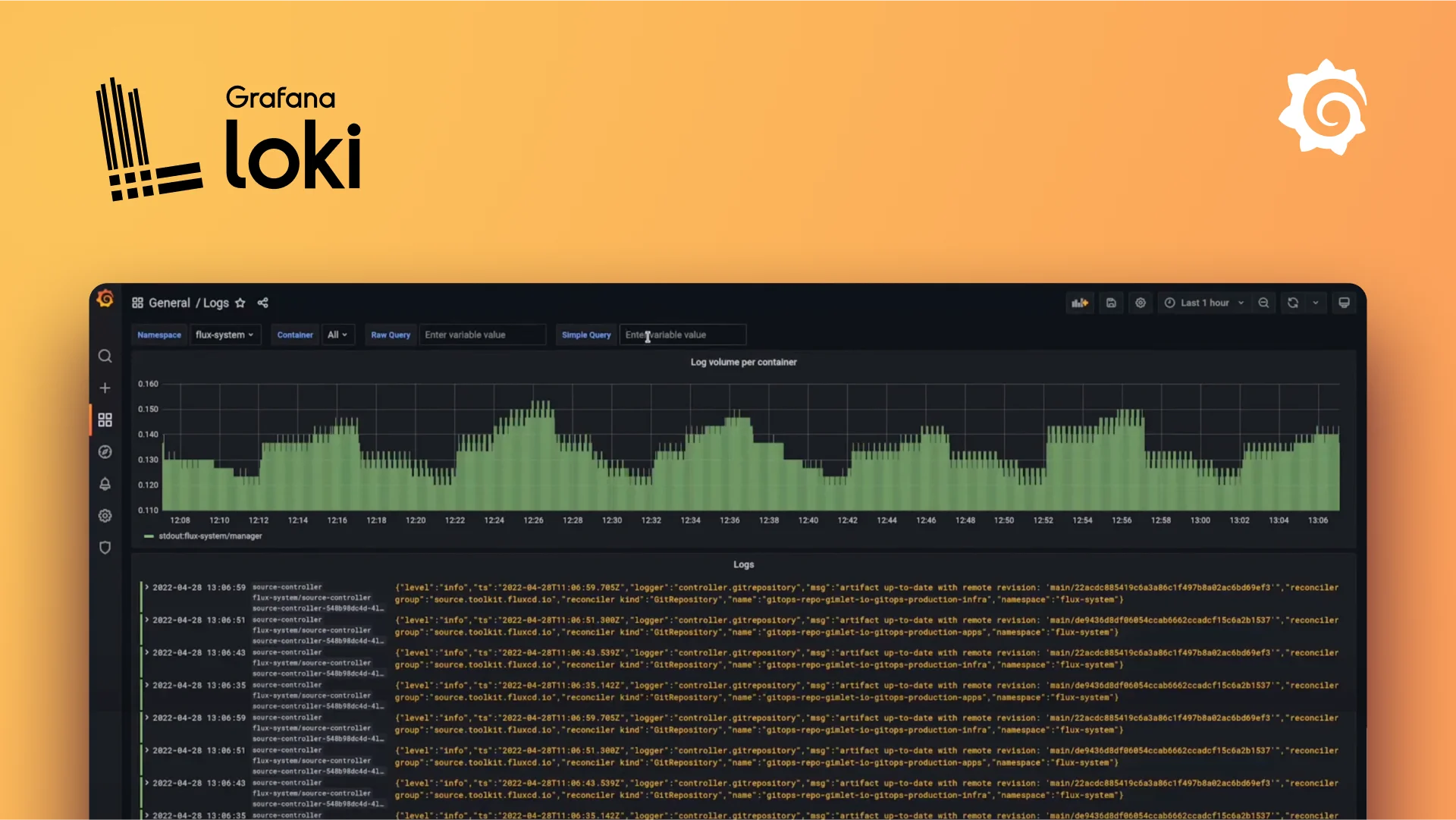
Grafana Loki is a production-grade, open-source log aggregation system developed by Grafana Labs and released under the AGPLv3 license. Inspired by Prometheus, Loki takes a unique approach to log storage by indexing only metadata labels rather than the full text of log lines — resulting in tiny indexes, cheaper storage costs, and simpler operations at petabyte scale using object storage backends. Loki's architecture consists of three main components: Promtail (a log collector that uses Prometheus-compatible service discovery), the Loki storage engine (which groups log entries into streams indexed by labels), and LogQL (Loki's powerful query language for slicing, filtering, and generating metrics from logs). Logs are available to query within milliseconds of ingestion, and real-time log tailing is fully supported. Key capabilities include multi-tenant isolation, high availability clustering, alerting rules that route to Prometheus Alertmanager, and seamless integration within Grafana dashboards to correlate logs with metrics and traces in a single UI. A command-line interface (LogCLI) is also available for users who prefer terminal-based workflows. Loki is ideal for platform engineers, DevOps teams, and SREs managing Kubernetes clusters, microservices, or large-scale infrastructure. With over 66,000 active users, 12,000+ GitHub stars, and 400+ contributors, it is one of the most widely adopted open-source observability tools available. It can be self-hosted or accessed through Grafana Cloud's fully managed offering.
Key Features
- Label-Based Indexing: Loki only indexes metadata labels rather than full log text, dramatically reducing storage costs and operational complexity compared to traditional log systems like Elasticsearch.
- LogQL Query Language: A powerful, Prometheus-inspired query language that lets you filter, aggregate, and generate metrics directly from log lines for flexible log exploration and analysis.
- Promtail Log Collector: A purpose-built log shipping agent that uses Prometheus service discovery to automatically collect, label, transform, and filter logs before ingestion into Loki.
- Native Grafana & Prometheus Integration: Seamlessly correlate logs with metrics and traces inside Grafana dashboards, and route log-based alerts through Prometheus Alertmanager for unified observability.
- Petabyte-Scale Object Storage: 100% persistence to object storage (e.g., S3, GCS) enables high-throughput, durable, and cost-effective log retention at virtually unlimited scale.
Use Cases
- Centralized log aggregation for Kubernetes clusters and microservices, with automatic pod and namespace label discovery via Promtail.
- Unified observability dashboards in Grafana that correlate application logs with Prometheus metrics and distributed traces in a single interface.
- Cost-effective long-term log retention at petabyte scale using cheap object storage backends like Amazon S3 or Google Cloud Storage.
- Real-time log-based alerting where teams define LogQL rules to detect anomalies and route alerts through Prometheus Alertmanager to Slack, PagerDuty, or email.
- Platform engineering teams building internal developer platforms who need a lightweight, open-source logging backend without the operational overhead of Elasticsearch.
Pros
- Extremely Cost-Effective: By skipping full-text indexing and storing logs in object storage, Loki requires far less infrastructure spend than Elasticsearch or Splunk for equivalent log volumes.
- Deep Observability Ecosystem Integration: First-class support within Grafana, native compatibility with Prometheus service discovery, and Kubernetes-ready design make it a natural fit for modern cloud-native stacks.
- Horizontally Scalable & Highly Available: Designed for multi-tenant, distributed deployments that can scale out to handle high-throughput log ingestion without downtime.
- Fully Open Source: Released under AGPLv3 with an active community of 400+ contributors, giving teams full transparency, extensibility, and self-hosting control.
Cons
- No Full-Text Log Indexing: Loki does not index log content, so unstructured log searches can be slower and less flexible than full-text search engines like Elasticsearch when querying across large volumes without proper labels.
- Requires Thoughtful Label Design: Query performance and cost efficiency depend heavily on well-designed label schemas at ingestion time; poor labeling strategies can lead to high-cardinality issues and degraded performance.
- AGPLv3 License Considerations: The AGPLv3 license requires that any modifications distributed as a network service must also be open-sourced, which may complicate usage for some proprietary enterprise environments.
Frequently Asked Questions
How is Grafana Loki different from Elasticsearch?
Unlike Elasticsearch, Loki does not index the full text of log lines — it only indexes metadata labels. This makes Loki significantly cheaper to operate and easier to scale, but means queries rely on label filtering first. Elasticsearch offers richer full-text search at a higher infrastructure cost.
What is LogQL?
LogQL is Loki's built-in query language, inspired by PromQL (Prometheus Query Language). It allows you to filter log streams by labels, search within log content using regex or string matching, and generate metrics like rate and count from log data for alerting and dashboards.
How do I get started with Grafana Loki?
The quickest path is creating a free Grafana Cloud account, which includes a managed Loki instance. For self-hosted deployments, you can download Loki from GitHub, deploy it via Docker or Helm on Kubernetes, and use Promtail or other clients to ship logs.
Is Grafana Loki free to use?
Yes. Loki is fully open source under the AGPLv3 license and free to self-host. Grafana Cloud offers a managed Loki service with a generous free tier and paid plans for larger workloads.
Does Loki support multi-tenancy?
Yes. Loki has built-in multi-tenant support, allowing different teams or applications to have isolated log namespaces with separate access controls within a single Loki deployment.