

About
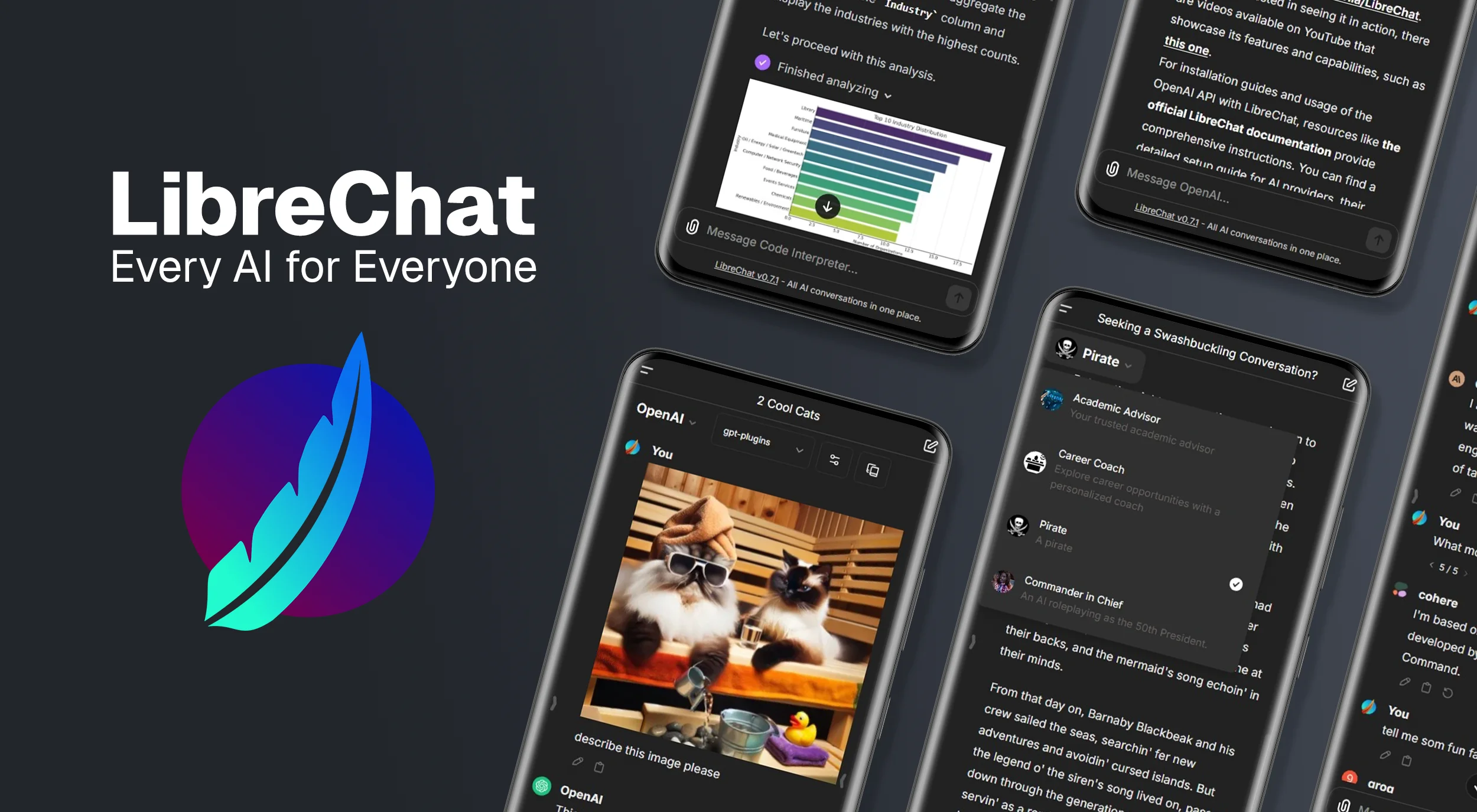
LibreChat is a powerful, self-hostable open-source AI platform designed to bring together all your AI conversations under one roof. It supports a wide range of AI model providers, including OpenAI, Anthropic, Azure OpenAI, and AWS, allowing users to switch between models seamlessly within a single interface. The platform features advanced AI agents capable of file handling, code interpretation, and API actions, enabling complex workflows without leaving the chat window. A built-in code interpreter supports multiple programming languages securely with zero configuration required. LibreChat also supports Artifacts, letting users generate and preview React components, HTML pages, and Mermaid diagrams directly in chat. For teams and enterprises, LibreChat provides SSO authentication via OAuth, SAML, and LDAP, plus two-factor authentication. Its Model Context Protocol (MCP) integration connects the platform to virtually any external tool or service. Persistent memory ensures contextual continuity across sessions, and a built-in web search feature gives any model live internet access with reranking. LibreChat is ideal for developers, enterprises, and AI enthusiasts who want full control over their AI stack. It's community-driven, with 335+ contributors, and can be deployed locally or on any cloud provider using Docker in minutes.
Key Features
- Multi-Model Support: Connect and switch between leading AI providers including OpenAI, Anthropic, Azure OpenAI, and AWS from a single unified interface.
- Advanced AI Agents: Build and run agents with file handling, code interpretation, and API action capabilities to automate complex tasks directly in chat.
- Model Context Protocol (MCP): Integrate with virtually any external tool or service using MCP support, extending what your AI can access and do.
- Enterprise-Grade Authentication: Supports SSO via OAuth, SAML, and LDAP, along with two-factor authentication for secure, enterprise-ready deployments.
- Persistent Memory & Web Search: Maintain context across conversations with persistent memory and give any model live internet access with built-in search and reranking.
Use Cases
- Enterprises deploying a private, self-hosted AI chat platform that connects to multiple LLM providers without sharing data with third-party SaaS tools.
- Developers building and testing AI agents with code interpretation, file handling, and external API integrations in a unified environment.
- Research teams using persistent memory and web search to conduct iterative, context-aware AI-assisted research across long sessions.
- Organizations requiring enterprise SSO (OAuth, SAML, LDAP) and two-factor authentication to comply with internal security policies.
- Individuals wanting a single interface to access and compare responses from multiple AI models like GPT-4, Claude, and others side by side.
Pros
- Truly Open Source: With 36k+ GitHub stars and 335+ contributors, LibreChat has a large, active community and is fully auditable and self-hostable.
- Broad Model Compatibility: Supports virtually every major AI provider in one place, eliminating the need to manage multiple separate tools or subscriptions.
- Enterprise-Ready Out of the Box: Comes with SSO, SAML, LDAP, and 2FA support, making it suitable for organizations with strict security and compliance requirements.
- Fast Deployment: With 31M+ Docker pulls and a comprehensive quickstart guide, teams can be up and running in minutes.
Cons
- Requires Self-Hosting: Unlike SaaS alternatives, LibreChat needs to be deployed and maintained on your own infrastructure, which requires technical expertise.
- Configuration Complexity: Connecting multiple AI providers, enabling MCP integrations, and configuring enterprise auth can be complex for non-technical users.
- No Managed Cloud Tier: There is no official hosted/managed version, meaning users are responsible for uptime, scaling, and updates themselves.
Frequently Asked Questions
Is LibreChat free to use?
Yes, LibreChat is fully open source and free to self-host. You only pay for the underlying AI model API usage from providers like OpenAI or Anthropic.
Which AI models does LibreChat support?
LibreChat supports a wide range of providers including OpenAI, Anthropic (Claude), Azure OpenAI, AWS Bedrock, and many others, all accessible from one interface.
How do I install LibreChat?
LibreChat can be installed locally or on a remote server using Docker. The official documentation provides a quickstart guide to get you running in minutes.
Does LibreChat support enterprise features?
Yes. LibreChat includes enterprise-ready features such as SSO via OAuth, SAML, and LDAP, two-factor authentication, and role-based access control.
What is Model Context Protocol (MCP) support?
MCP is a protocol that allows LibreChat to connect to external tools and services, enabling AI agents to interact with databases, APIs, and third-party applications directly from chat.