

About
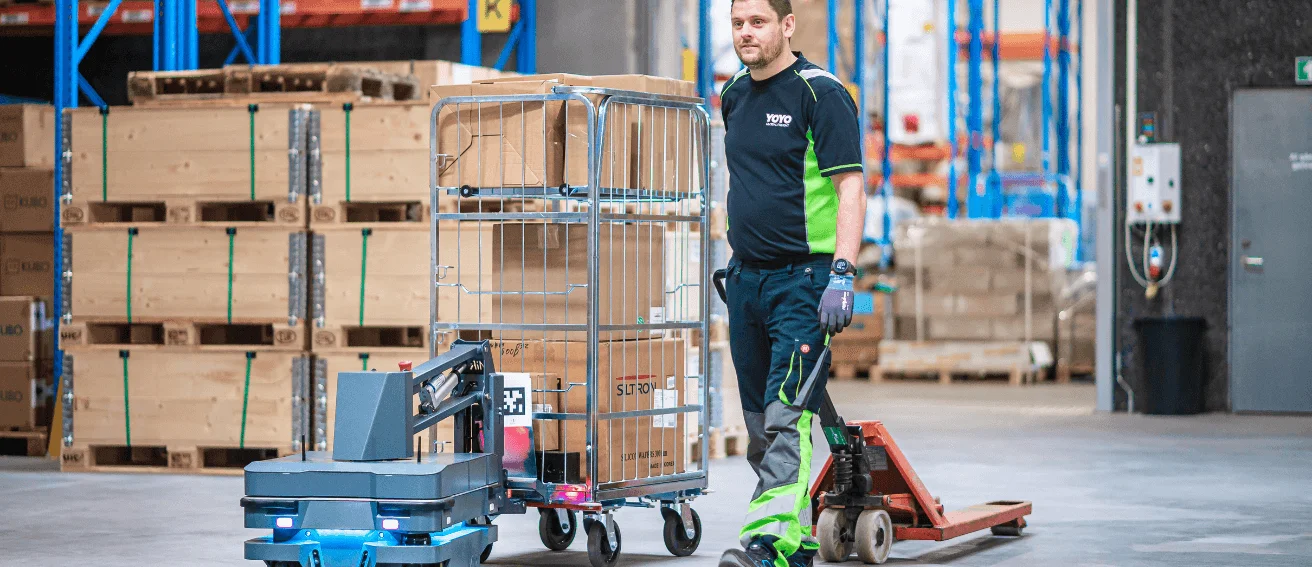
Mobile Industrial Robots (MiR) is a leading provider of autonomous mobile robots (AMRs) built to automate internal transportation and material handling across industrial and logistics environments. Their product lineup spans a versatile range — from the agile MiR250 (carrying up to 250 kg) to the powerhouse MiR1350 and the AI-enabled MiR1200 Pallet Jack (handling up to 1200 kg pallets) — all capable of navigating dynamic environments safely and efficiently at speeds up to 2 m/s. MiR robots can be fitted with top modules to tow carts, lift shelves, or transport pallets, making them adaptable to a wide range of intralogistics tasks. The fleet management software allows operators to coordinate multiple robots from a central platform without requiring deep technical expertise. Designed for enterprise-scale deployments, MiR supports customers through every stage of AMR adoption — from initial pilot projects to full fleet rollouts — backed by a global partner network spanning 250+ locations. The MiR Academy provides on-demand and expert-led training, while the 24/7 MiR Support service ensures minimal downtime. Industries served include manufacturing, warehousing, logistics, and healthcare, where MiR AMRs consistently deliver measurable gains in productivity, operational safety, and ROI.
Key Features
- Versatile AMR Product Range: A family of autonomous mobile robots from 250 kg to 1200 kg capacity, including the AI-enabled MiR1200 Pallet Jack, adaptable with top modules for towing, lifting, and transporting.
- Scalable Fleet Deployment: Supports businesses from initial pilot projects all the way to full-scale fleet deployments, with centralized fleet management software.
- 24/7 Global Support Network: MiR Service provides round-the-clock technical support backed by 250+ partner locations worldwide, ensuring rapid response and minimal downtime.
- MiR Academy Training: On-demand and expert-led online courses that help teams build the skills needed to deploy, operate, and scale AMR fleets confidently.
- Modular & Customizable Design: Top modules allow robots to be configured for diverse tasks including cart towing, shelf transport, and pallet handling without major engineering effort.
Use Cases
- Automating repetitive material transport between production lines and warehouses in manufacturing facilities.
- Replacing manual forklift operations for pallet handling and movement in large distribution centers.
- Streamlining intralogistics in pharmaceutical or healthcare environments where precision and safety are paramount.
- Towing carts loaded with components across factory floors to support just-in-time manufacturing processes.
- Scaling a warehouse automation strategy from a small pilot AMR deployment to a coordinated multi-robot fleet.
Pros
- Wide Payload Range: With models covering 250 kg to 1200 kg, MiR has an AMR solution suitable for light to heavy industrial material handling needs.
- Enterprise-Ready Ecosystem: Comprehensive support infrastructure including 24/7 service, global partner network, training academy, and community resources reduces operational risk.
- Modular Adaptability: The ability to add top modules allows a single robot platform to be repurposed for multiple tasks, maximizing ROI across diverse workflows.
Cons
- High Upfront Capital Cost: Industrial AMR hardware represents a significant capital investment, which may be a barrier for smaller businesses or those early in automation adoption.
- Requires Physical Infrastructure Consideration: Successful deployment requires careful facility planning — floor conditions, layout mapping, and integration with existing workflows — adding implementation complexity.
- Not a Pure Software Solution: Unlike software-only AI tools, MiR requires physical hardware procurement, installation, and ongoing maintenance, which extends time-to-value.
Frequently Asked Questions
What is an autonomous mobile robot (AMR)?
An AMR is a self-navigating robot that uses sensors, AI, and mapping technology to move through a facility autonomously, transporting goods without fixed tracks or human guidance.
What types of tasks can MiR robots perform?
MiR robots can transport goods, tow carts, lift and move shelves, and handle pallets up to 1200 kg, depending on the model and top module configuration used.
How does MiR support businesses scaling from pilot to full deployment?
MiR provides a structured AMR journey framework, a global partner network in 250+ locations, fleet management software, and dedicated technical support to guide businesses at every stage.
Is technical expertise required to operate MiR robots?
MiR robots are designed to be user-friendly, and the MiR Academy offers online and expert-led training so operational teams can learn to deploy and manage fleets without deep robotics expertise.
What industries use MiR autonomous mobile robots?
MiR AMRs are used across manufacturing, warehousing, logistics, pharmaceuticals, and healthcare industries where internal material transportation is a critical and repetitive operation.