

About
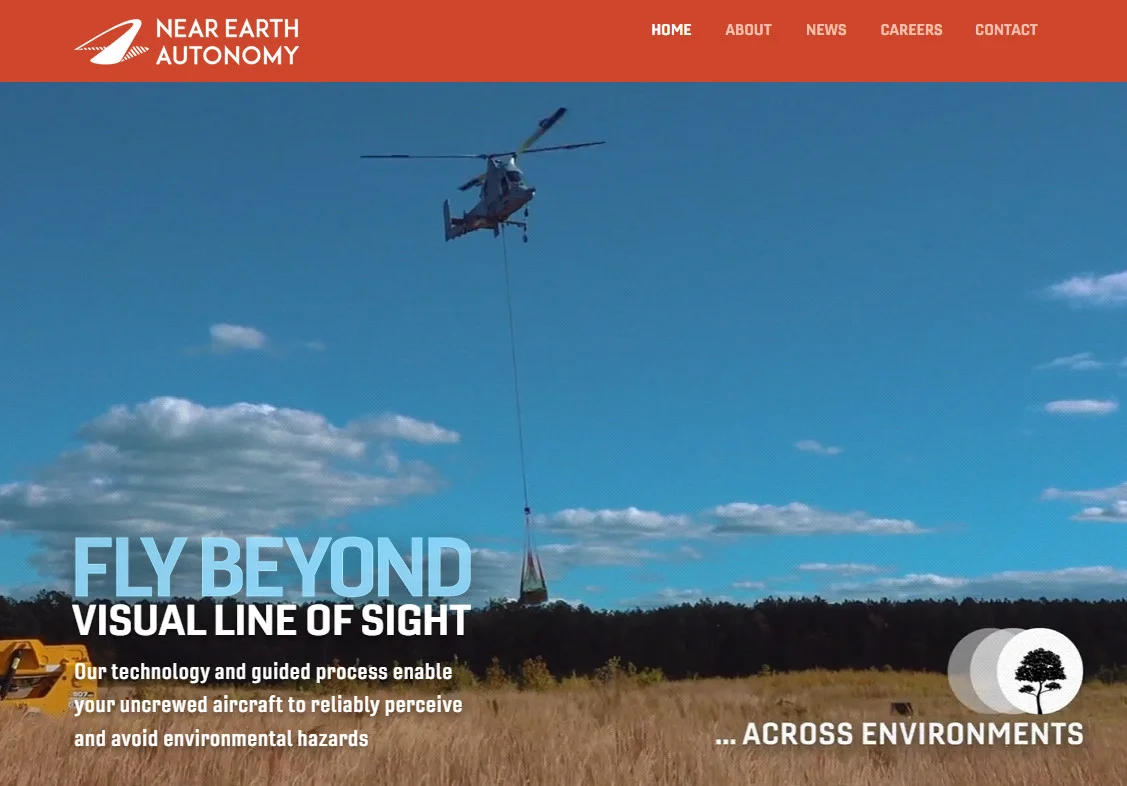
Near Earth Autonomy is an aerial autonomy systems company that empowers uncrewed aircraft to take off, fly, and land reliably in real-world conditions—even in GPS-denied environments. Built on decades of robotics expertise from Carnegie Mellon University, the company bridges the gap between aerospace engineering and advanced robotics to deliver mission-critical autonomous flight capabilities. At the core of their offering is a comprehensive autonomy stack that spans sensors, computing hardware, software, and user experience (UX) layers. This stack is designed to be efficiently customizable and scalable across more than 140 integrated airframe types. With over 10,000 flights and 4,000+ hours of logged flight time, the system has been battle-tested across a wide range of aircraft sizes and applications. Near Earth Autonomy's partner-centered assurance process—branded as the CAPTAIN EXPERT PROCESS—guides clients through every step: mission definition, integration, testing, certification, deployment, service, and upgrades. This ensures both mission assurance and safety assurance without reliance on external infrastructure. The company's products include Firefly (a compact flight system) and the RUC-60 (an optionally piloted Black Hawk helicopter), and they serve industry leaders in both the commercial sector (aerial mobility, infrastructure inspection) and defense sector (unmanned military operations). Trusted by partners like Boeing and KAMAN, Near Earth Autonomy is the go-to platform for organizations that require proven, certifiable autonomy solutions for complex aerial environments.
Key Features
- GPS-Independent Navigation: Enables uncrewed aircraft to safely perceive and avoid environmental hazards in real time, even in GPS-denied environments, without requiring external infrastructure.
- Comprehensive Autonomy Stack: A fully integrated solution covering sensors, computing, software, and UX layers—customizable and scalable across 140+ airframe types.
- Partner-Centered Assurance Process: The CAPTAIN EXPERT PROCESS provides step-by-step guidance from mission definition through certification, deployment, and post-launch upgrades.
- End-to-End Expert Support: Strategic and technical guidance across all phases: integration, testing, certification, deployment, field service, and capability upgrades.
- Proven Flight Track Record: Over 10,000 flights and 4,000+ hours of flight time across diverse aircraft types, applications, and autonomous flight scenarios.
Use Cases
- Autonomous aerial inspection of infrastructure such as power lines, pipelines, and industrial facilities without requiring a human pilot.
- Defense and military unmanned aircraft operations in GPS-denied or contested environments where reliable autonomy is mission-critical.
- Commercial urban air mobility applications requiring safe, certified autonomous takeoff, flight, and landing capabilities.
- Optionally piloted helicopter conversions, such as the RUC-60 Black Hawk, enabling crewed or fully autonomous operation based on mission requirements.
- Certification-grade autonomy integration for aviation OEMs and operators who need a proven, scalable autonomy stack for new uncrewed aircraft programs.
Pros
- Battle-Tested at Scale: With 10,000+ flights logged across 140+ airframes, the platform has demonstrated reliability in demanding real-world conditions.
- Deep Aerospace & Robotics Expertise: Founded by Carnegie Mellon robotics pioneers, the team brings decades of cross-disciplinary expertise that bridges aerospace certification requirements and advanced autonomy.
- Infrastructure-Free Operation: The autonomy stack manages hazards without reliance on GPS or external ground infrastructure, making it viable in contested or remote environments.
- Trusted by Defense and Commercial Leaders: Deployed by partners including Boeing and KAMAN, with endorsements from U.S. European Command and other high-stakes operators.
Cons
- Enterprise-Only Engagement Model: Designed exclusively for large commercial and defense organizations; not accessible to individual developers or small teams exploring drone autonomy.
- Complex Integration and Certification Process: Achieving full deployment requires navigating multi-phase certification workflows that can be time-intensive and resource-heavy for new partners.
- Niche Application Domain: Focused narrowly on aerial autonomy for uncrewed aircraft, limiting relevance to organizations outside aerospace, defense, and industrial inspection.
Frequently Asked Questions
What types of aircraft does Near Earth Autonomy support?
Near Earth Autonomy supports over 140 integrated airframe types, ranging from compact uncrewed aerial systems to large optionally piloted helicopters like the RUC-60 Black Hawk.
Does the technology require GPS to function?
No. Near Earth Autonomy's core value proposition is GPS-independent operation. Their autonomy stack perceives and avoids hazards in real time without relying on GPS or external ground infrastructure.
What industries does Near Earth Autonomy serve?
The company serves both commercial sectors (aerial mobility, infrastructure inspection) and defense sectors (unmanned military operations), working with aviation leaders and government operators.
What does the end-to-end support process include?
Their CAPTAIN EXPERT PROCESS covers mission definition, hardware and software integration, testing, regulatory certification, deployment, ongoing service, and future capability upgrades.
How do I get started with Near Earth Autonomy?
Organizations can request a complimentary consultation with their assured autonomy experts via the contact form on their website or by emailing [email protected].